|
There are three main volcanoes near the town of Kisoro each between 10,000-13,000 feet high and the volcano that appealed to us the most was Mt Sabyinyo (whose summit marked the border between Uganda, Rwanda and the Congo). Mt Sabyinyo translates to mean “old mans teeth” and was given this name because the mountain had three separate jagged peaks which could look like an old man missing some teeth. Essentially, at the top we could be in three countries at once as well as say we’ve been in the Congo and Rwanda! Despite the 8-10 hour round trip and 4,000 ft elevation gain, we were convinced. This also meant another 5AM wake up call. |
||||||||||||||||||||||||||||||||
|
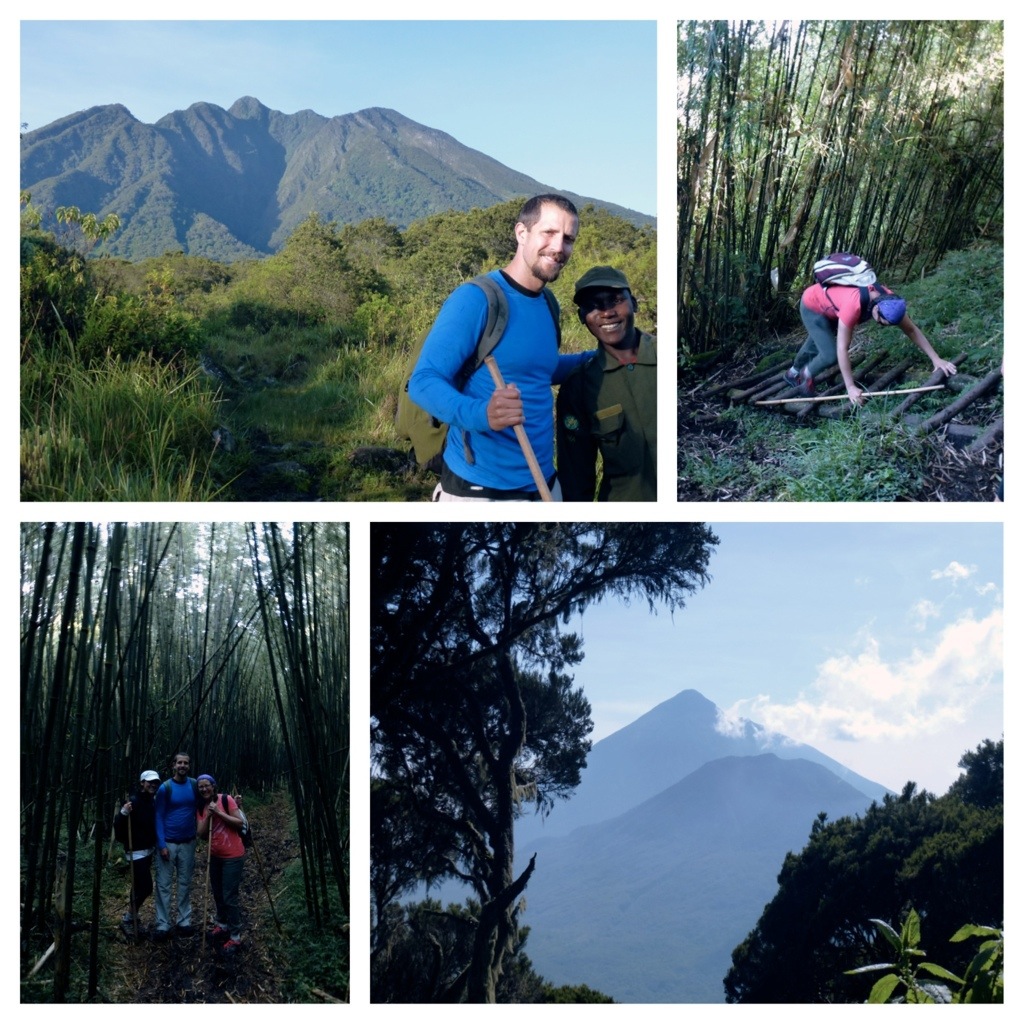
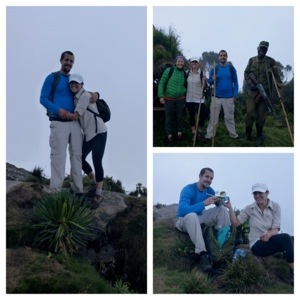
The roads up to the start of the hike were unpaved and extremely rocky, making a 10-minute drive turn into over an hour. By the time we arrived, we were ready to get started! We had two tour guides – Brian and Ellie (our armed security guard). and hit the trail at 7:37 am, knowing we were in for a long hike. The first hour and a half was fairly easy, a slight incline as we made our way to the base of the volcano. The annoying part was making our way through some very swampy areas. The deep muddy water was unavoidable and we had to slowly pick our way through the swamp. The soft ground made it easy to spot elephant and buffalo tracks which were all over the place. Fortunately, Ellie didn’t have to use his gun as we only heard the animals but did not see any. Below are pictures of our first glimpse of the Congo and Rwanda. |
|||||||||||||||||||||||||||||||
|
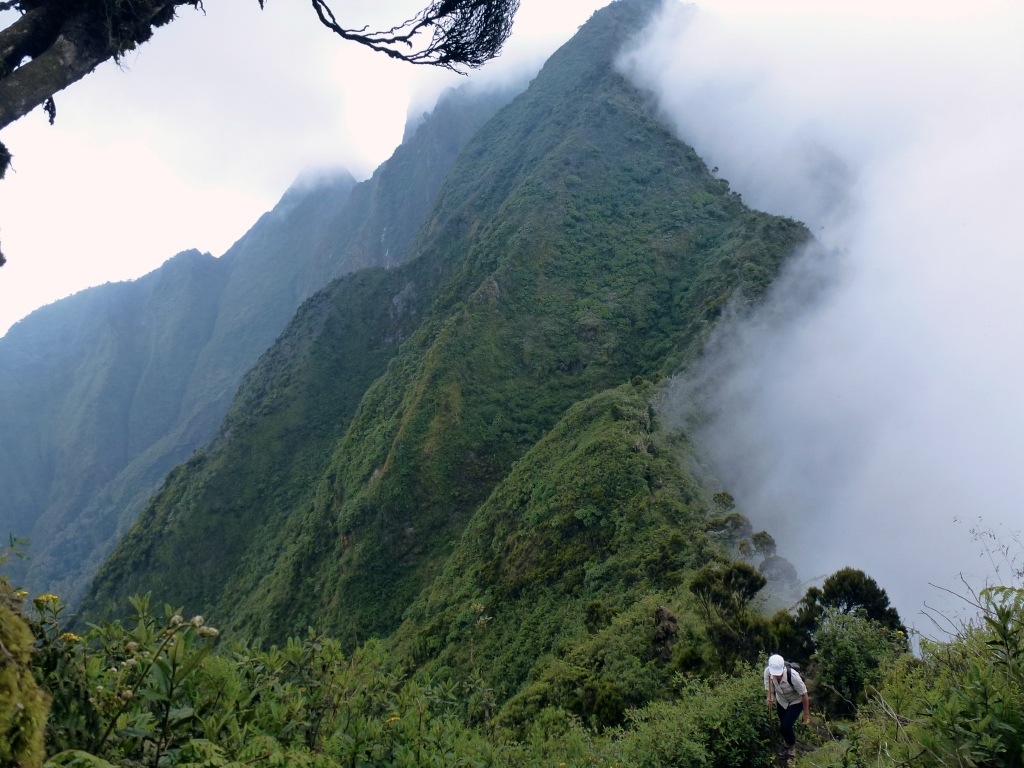
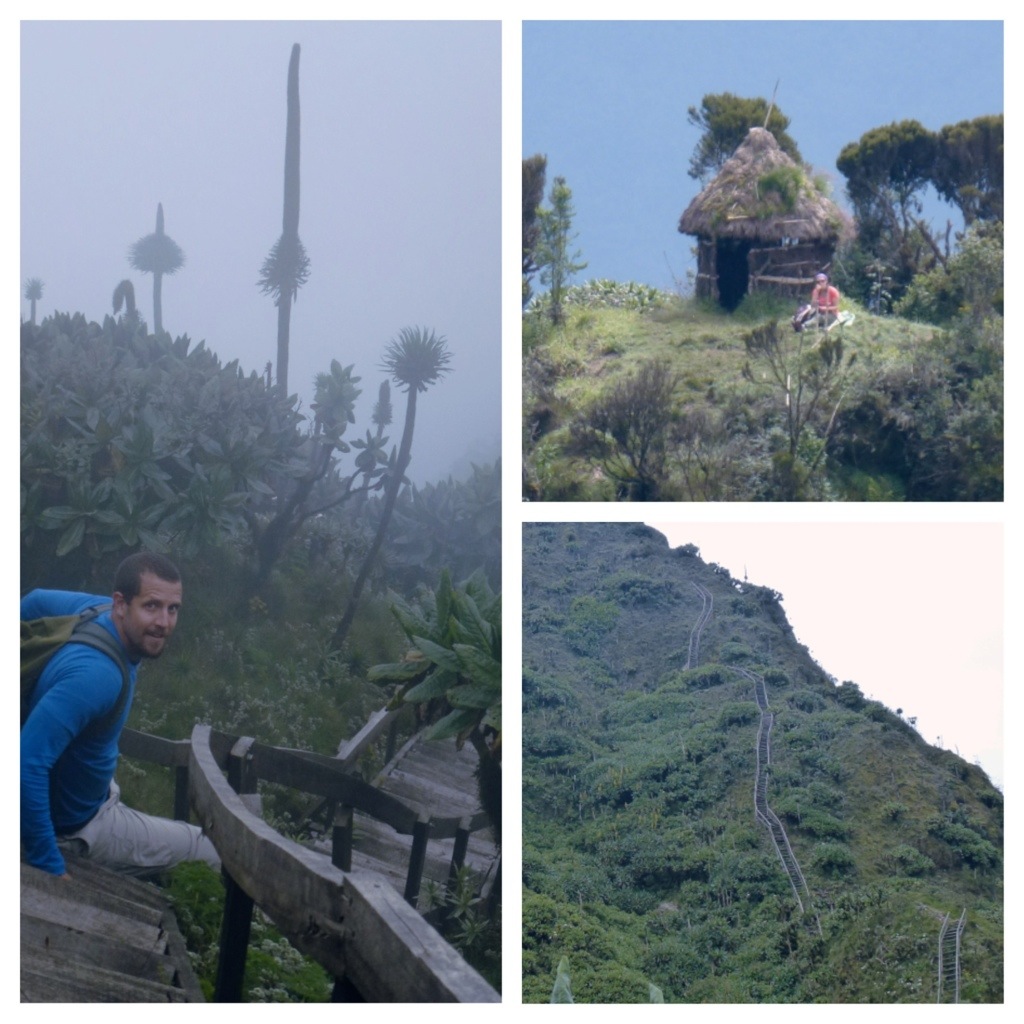
The lower part of the hike had some amazing dense bamboo forests. Once at the base of the volcano we were told things were about to get more difficult and we could see why. The trail now was going pretty much straight up, along a ridge that will take us to the first peak. It was about an hour and a half to the summit of the first peak and we probably gained 2,000 feet in elevation… At the top we could see the next two summits and could see the ladders that you had to climb to reach peak three (see pictures below). Along the way we had already used some of these ladders which were built out of sticks to help with steep sections. Peak 3 was pretty much all ladders since we had to go straight up to reach the top. This part was very scary for both of us. |
||||||||||||||||||||||||||||||

|
While we were never that high off the ground, the ladders were built on a very narrow ridge with 1,000 foot drop offs on either side. To make things worse a few of the ladder steps were loose and would move just a little bit. Very unnerving considering the height. We made it to the top of peak 3 with our guide Brian at around 11:50 pm. My mom stayed back at Peak 1, she was very tired and was not up for the ladders and wisely stayed back with Ellie. It was one of the scariest things we have ever done. |
|||||||||||||||||||||||||||||
|
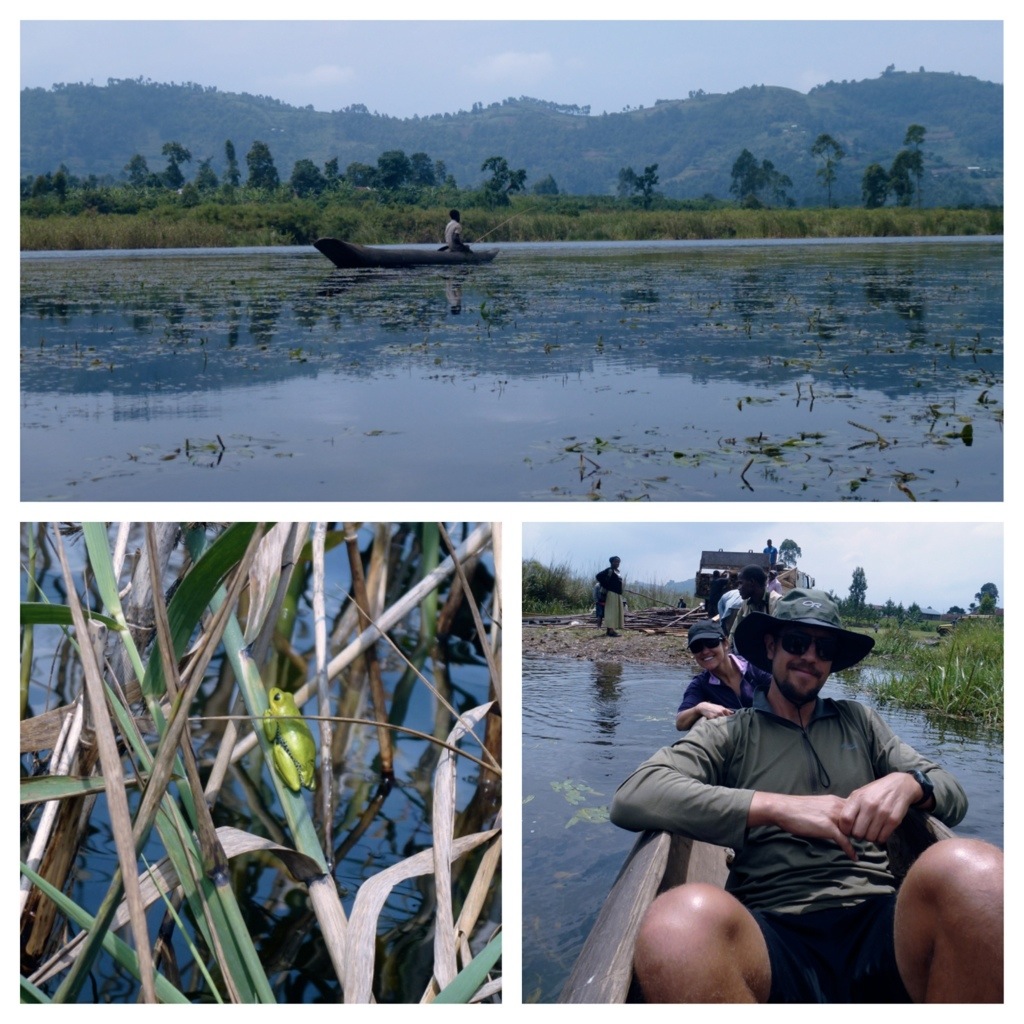
At the top, we made sure to spend some time in each country and even had lunch in the Congo (hey! Now we can say we have been to Rwanda and the DRC!). We had great views looking out towards Rwanda but clouds had rolled in blocking our views of the Congo. Brian thought it was best that we start the hike down given the cloud coverage and his prediction turned out to be true. For 2 hours, we were pummeled by one of the biggest downpours I have ever seen. Soon the trail turned into a river and every inch of us was soaked. We even had hail, painful enough that we had to keep any bare skin protected. Unfortunately, this slowed our pace down and we didn’t make it back to the car until 4:10 pm, 8.5 hours in total and soaking wet. Still, it was one of the most rewarding mountains we’ve climbed. It was physically demanding, 8.5 hours, 4,000 ft elevation gain, and submitted 5 peaks in total. As I said, climbing those ladders was one of the scariest things we’ve done but it was worth it to see the amazing views and check two more countries off the list. We also had a great time with our guides, Brian and Ellie. Two very nice guys which really made the trip more enjoyable. We had never been more excited for a warm shower and decided not to climb another volcano the next day. Especially with our plan to watch the Super Bowl at 2:30 am which is all I will say about the Super Bowl. The next day we were exhausted and enjoyed a lovely afternoon on the lake — where our guides were canoeing and we were relaxing! |
||||||||||||||||||||||||||||
|
We loved Kisoro – wonderful little town in Uganda. |
|||||||||||||||||||||||||||
|
At this stage of our trip, 5AM wake up calls were becoming the norm. Today, after only two hours spent in the car, we arrived at Biwindi National Park for the gorilla trek. The drive to the visitor center was rough but took us through spectacular scenery (very similar to the road that took us to Kisoro); very steep drop offs, big mountains and lush green rainforest. It was amazing to see how much of the mountainside the locals are able to farm. Even on the steepest slopes, they have crops planted to the top. This area also gets very misty in the morning so we can see where the term “gorillas in the mist” came from. |
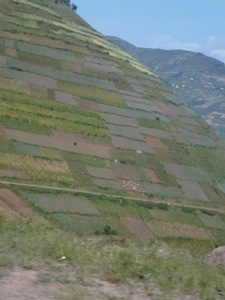
|
Neither of us really knew what to expect for the gorilla trek. All what we were told was (1) it could take up to 8 hours to find them and (2) to bring a rain jacket. I (Rob) thought we would be in a big group and only see them from a long distance, but what ended up happening was the 30+ trekkers were broken up into 4 groups. Each group had a guide and a security guard with an AK47. The reason for the gun was to protect us from other animals, including elephants and buffalo which are known to charge at times. Even the gorillas could be unpredictable. It turns out each group hikes to their own family of gorillas (which is about 10 gorillas per family and up to 20 gorillas). Each family has 2-3 people following them on a daily basis to ensure the trekkers are able to see them. |
|
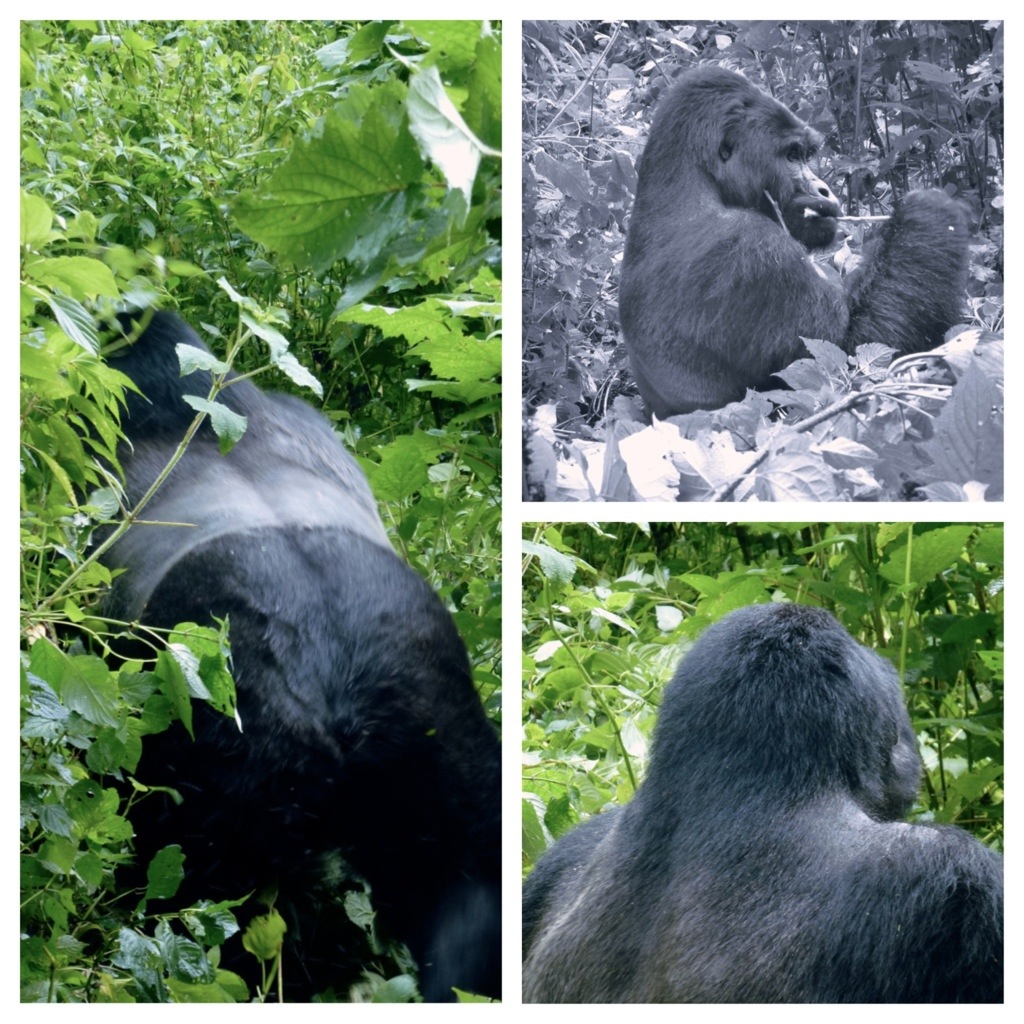
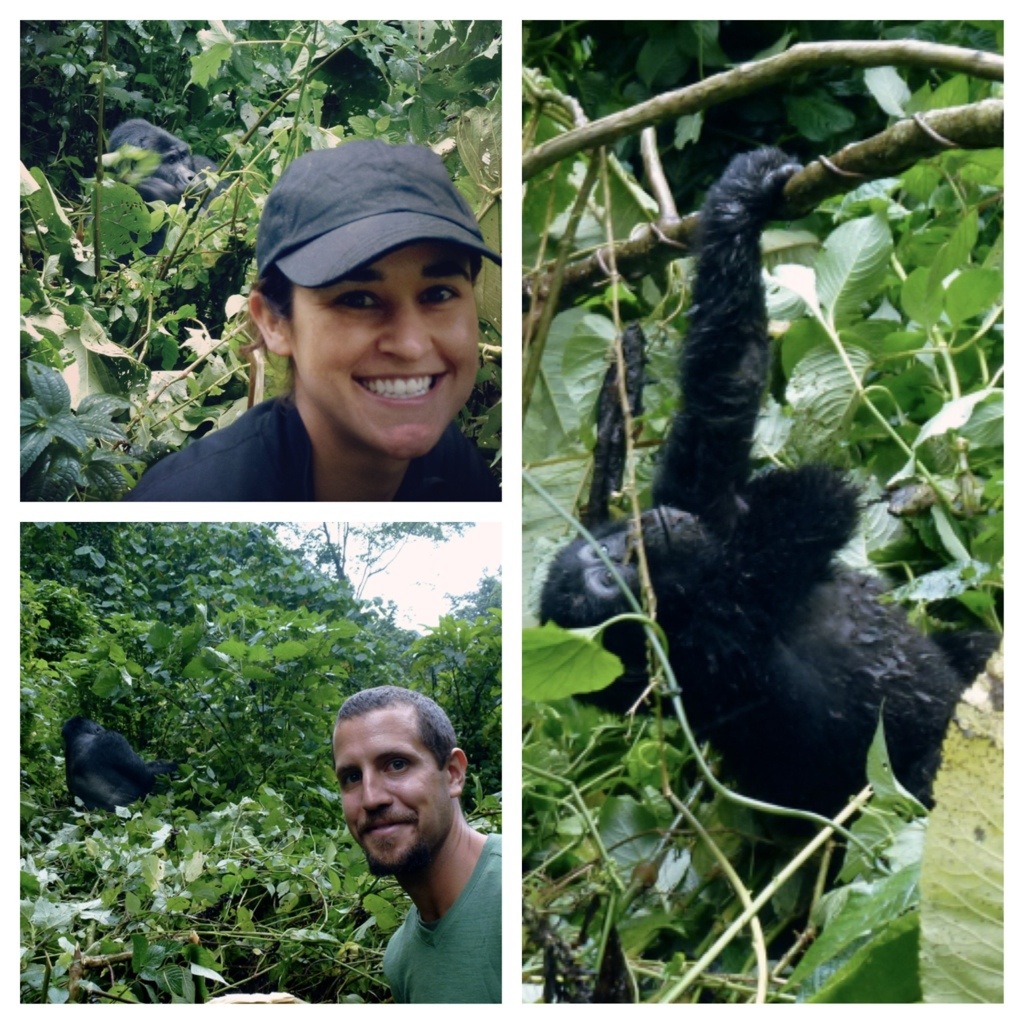
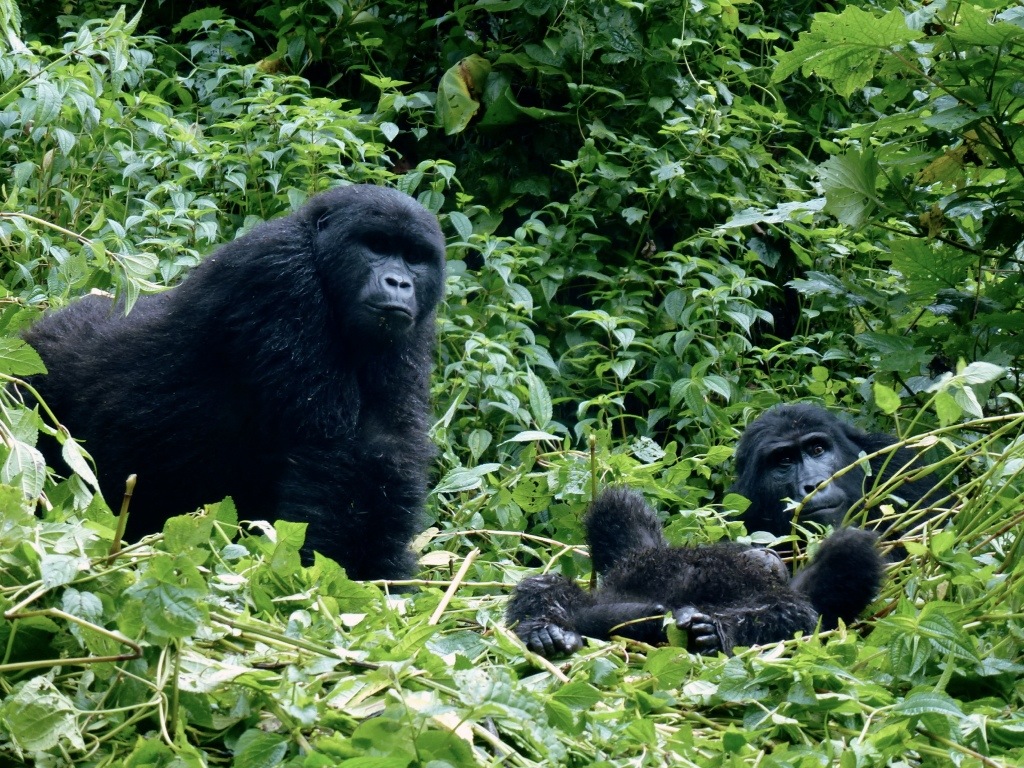
So our group of 10 (including 2 guides) set off to go find our family of gorillas (interestingly, we found out later how many locals know the gorilla families and asked us which family we were following). Most of the hike was along a pretty nice trail through the rainforest. After about an hour our guide received word of where exactly the gorilla were located. This meant bush-whacking time. Our guides used big knife to start blazing a trail through the rainforest towards the location of the gorillas as we slowly followed behind, slipping and sliding down a steep embankment. Twenty minutes later, we saw our first silver back (a.k.a. THE KING OF THE JUNGLE). I couldn’t believe how close we could get!! |
||||||||||||||||||||||||
|
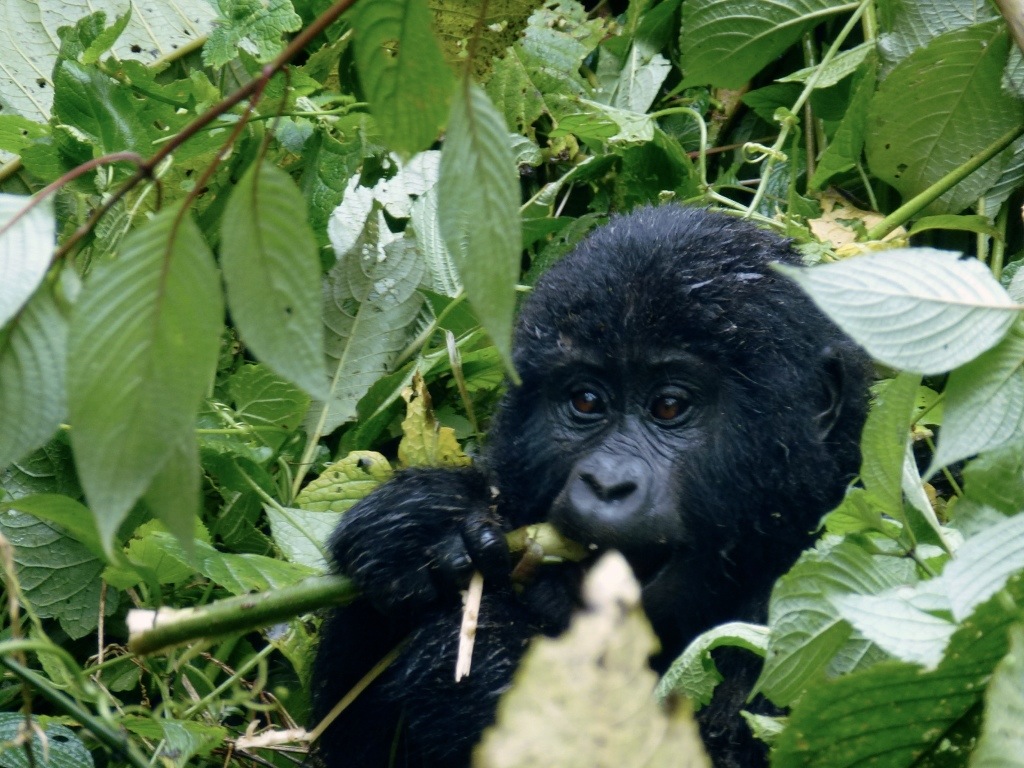
We got some amazing pictures and had over an hour with the wild gorillas. Even better, our guides said we were lucky to have such good views and were able to get so close. An amazing experience to say the least. |
|
I found all this Gorilla information just fascinating. We learned a vast array of info from Gorilla Tours including: |
|
Male Gorillas: |

|
Female Gorillas: |
|
Lifestyle: |
African Safari
|
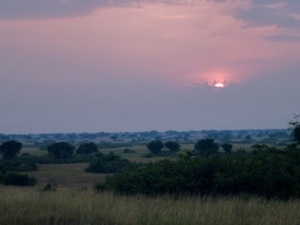
We entire drive towards Queen Elizabeth National Park was very pretty with lush green rolling hills and gorgeous houses (surprisingly)! We saw several huge tea plantations which were also beautiful. As we approached the park, we saw elephants off the road. |
|
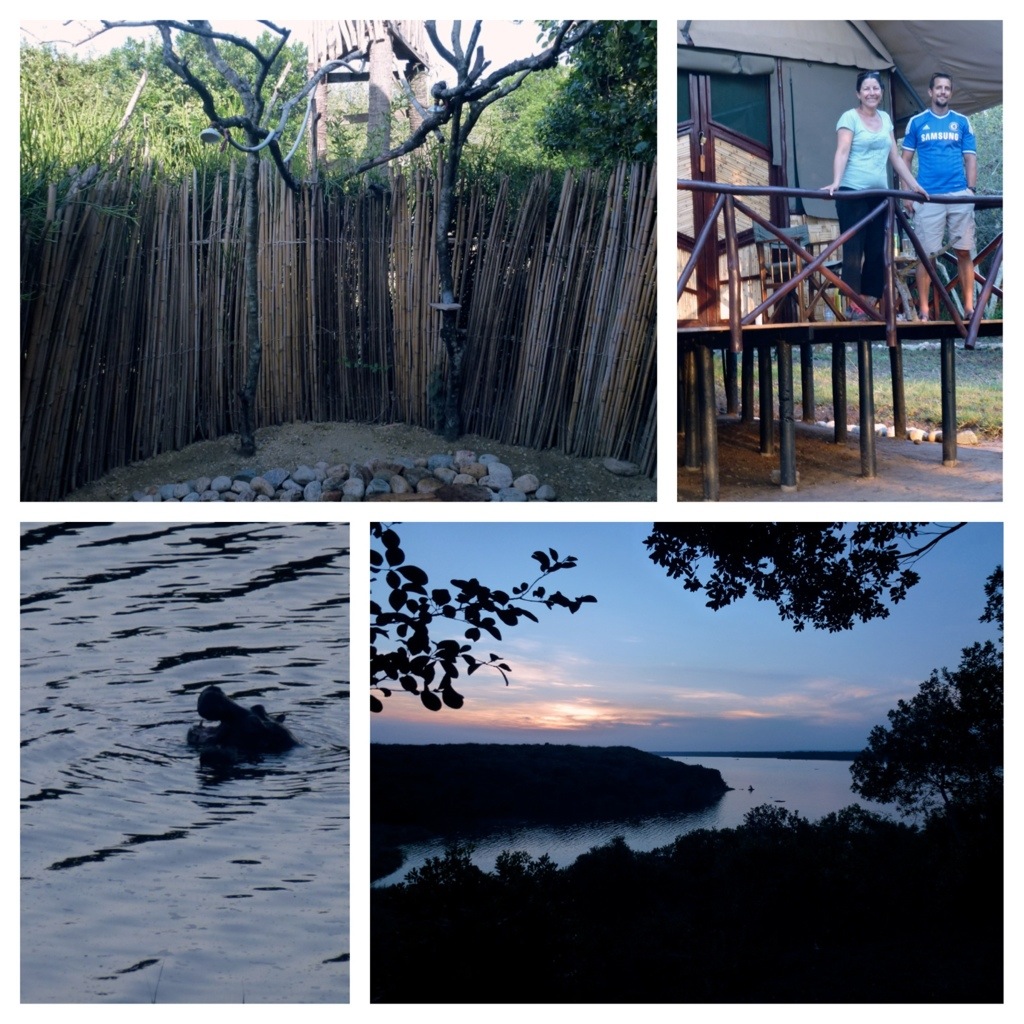
The bush lodge was pretty awesome and a step up from what we had experienced in Makondo; individual huts with screen walls and all over looked the river full of hippos. Can you imagine? We were able to see hippos from our balcony!! You could hear them splashing and making a barking noise all night. We were told not to leave the hut after dark unless we had a guide. The hippos and buffalo walk through the huts at night and can be dangerous. |
|
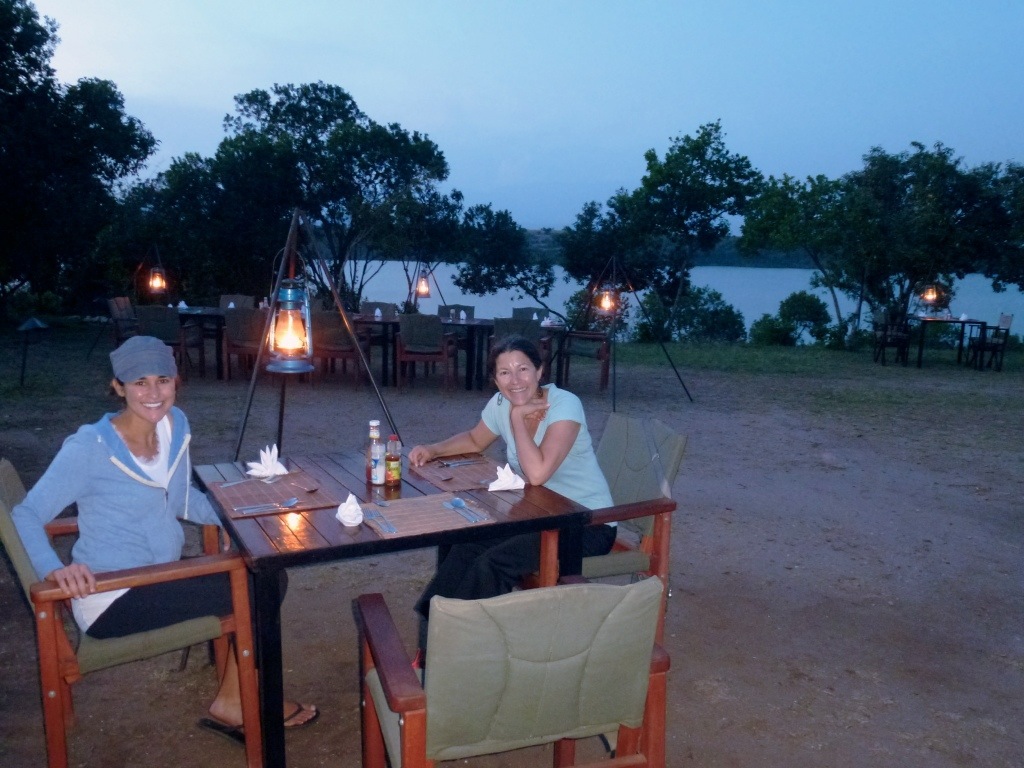
We had dinner under the stars and by a campfire – just an amazing setting with a 4 course meal with lamb chops for the main. Stunning place to stay for a few nights! |
|
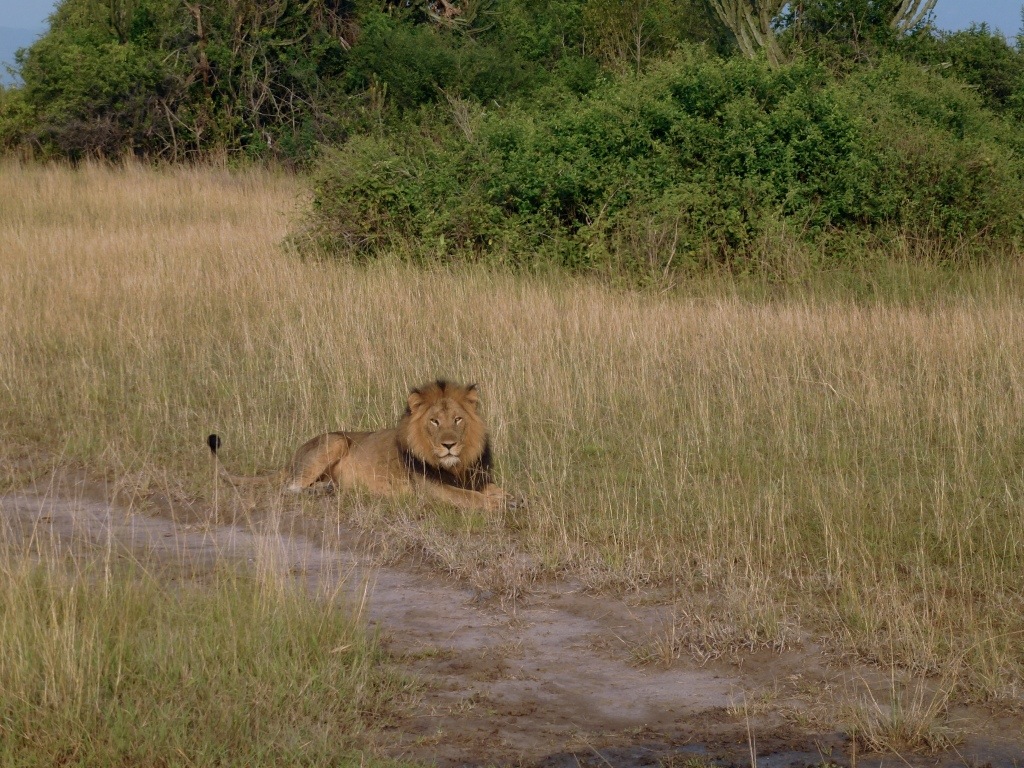
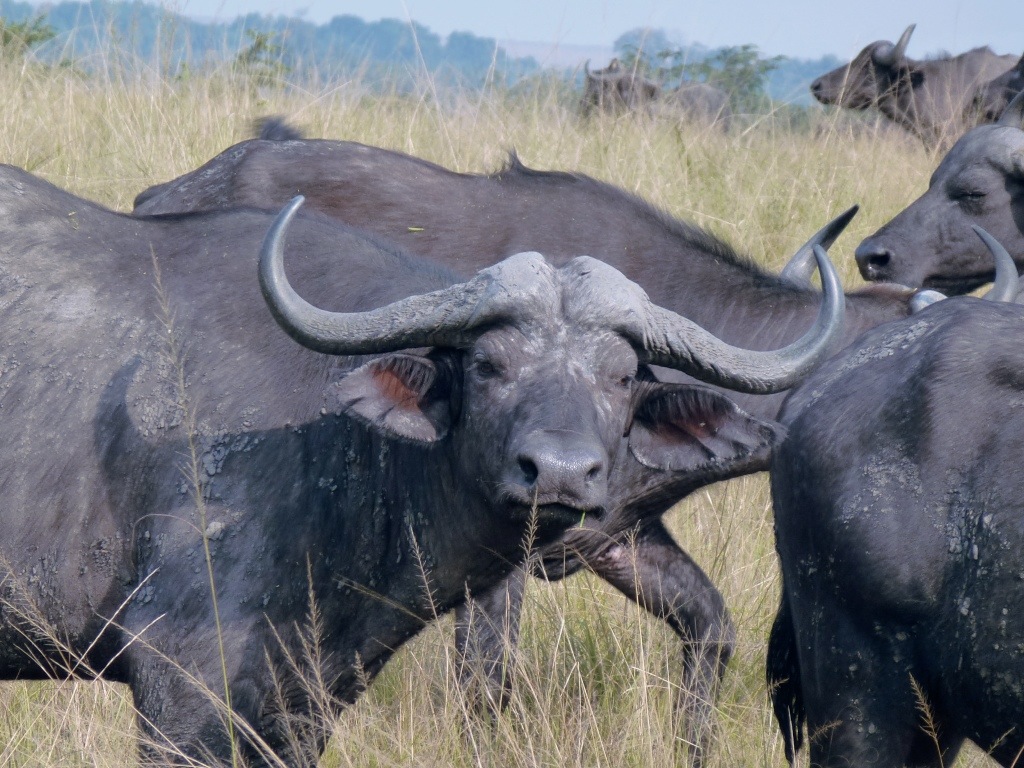
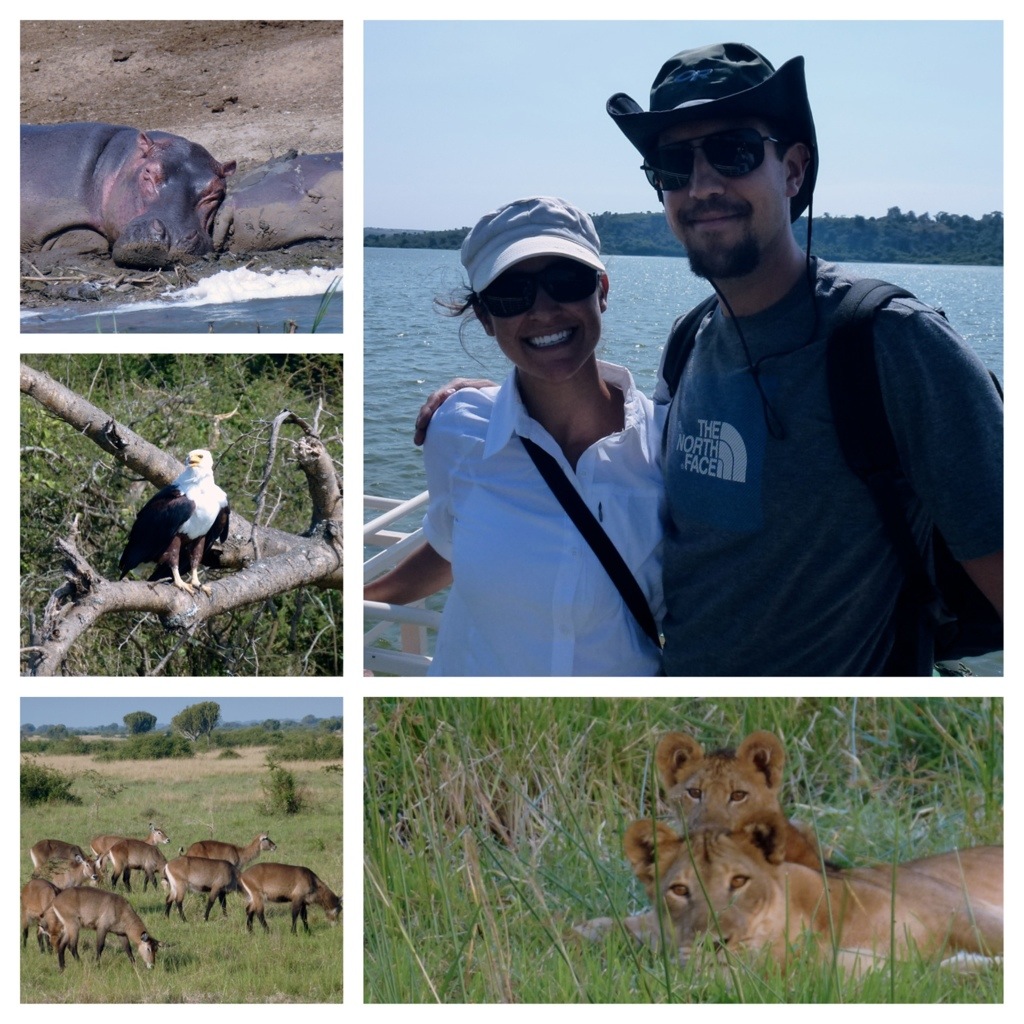
The highlight of the morning safari was a lone make lion that we were able to get really close to. We took a boat cruise for part of the day that got us really close to tons of hippos, water buffalo, crocs, and many different kinds of birds. From the boat safari, our driver (Francis) picked us up from the boat safari and took us directly to or evening game drive. |
|
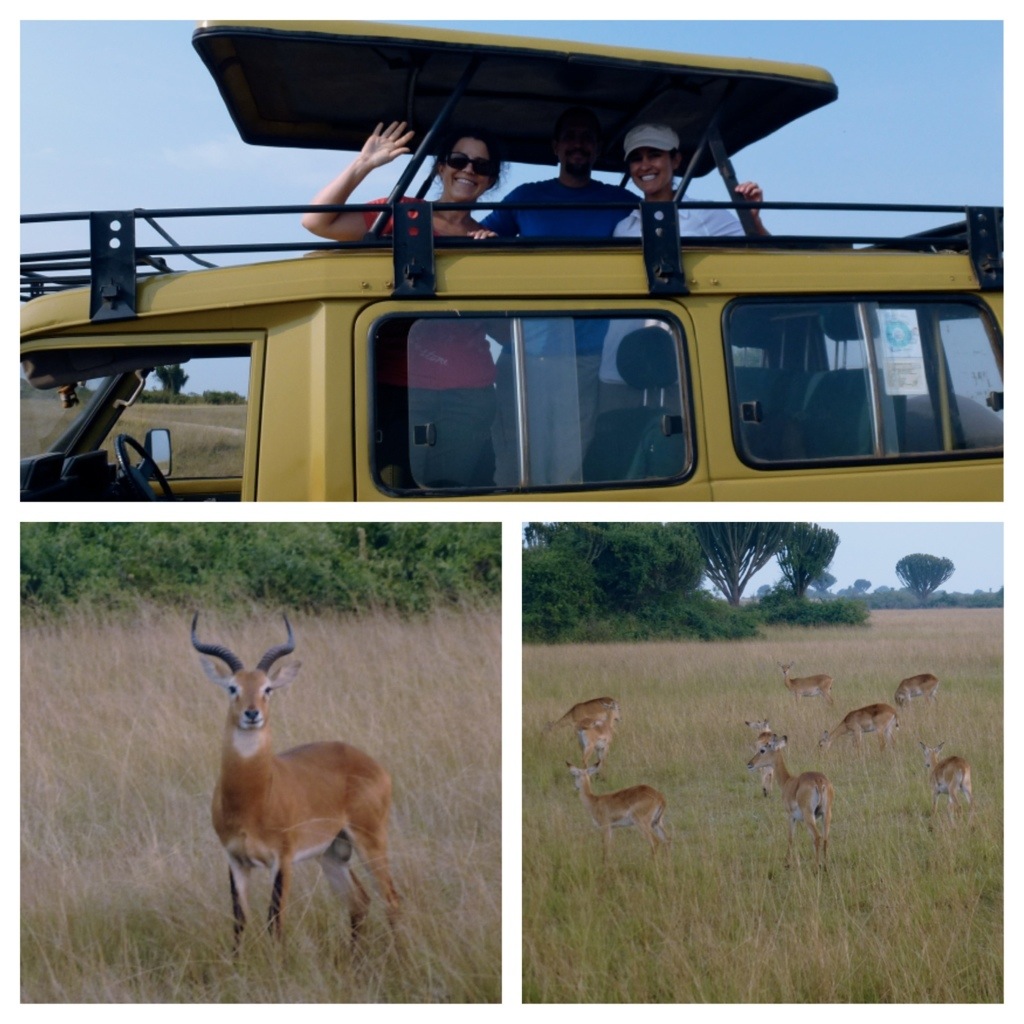
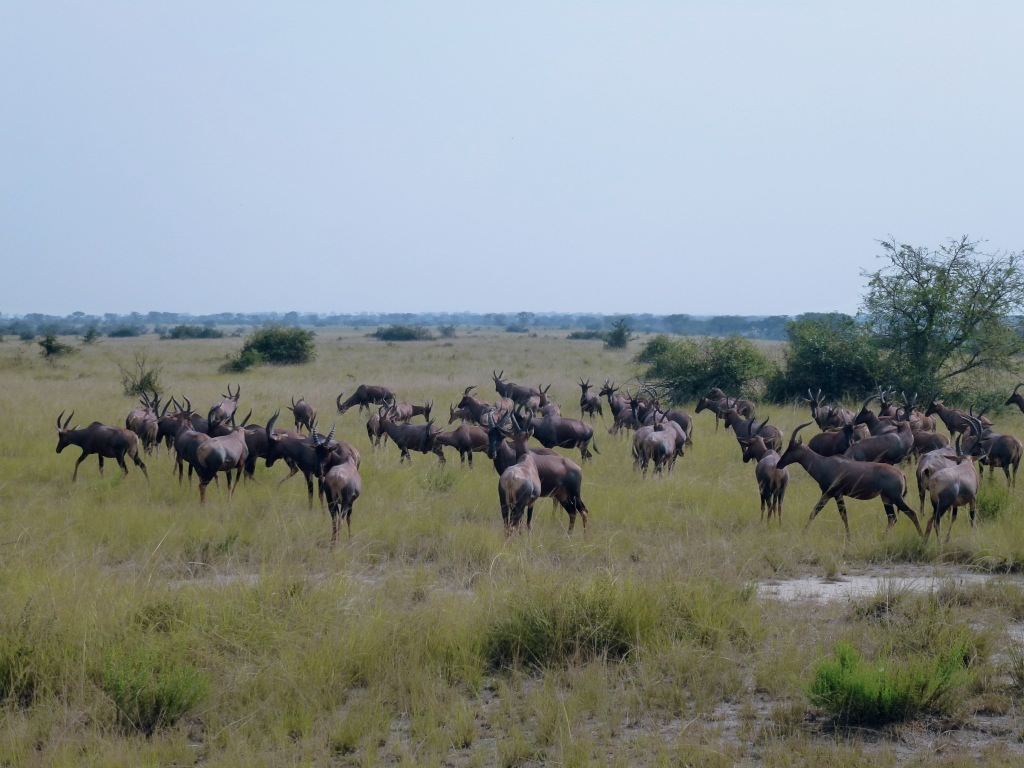
The goal was simple, more lions. We drove back to the spot where we saw the lone male and spotted a kob that appeared to be under distress. Its ears were perked up and for some reason it kept sprinting away (Francis told us this was a sign that a lion or leopard was nearby). Both my mom and our driver agreed that something was wrong (check out the video here: https://www.youtube.com/watch?v=HgTvdupwsG8&feature=youtu.be). |
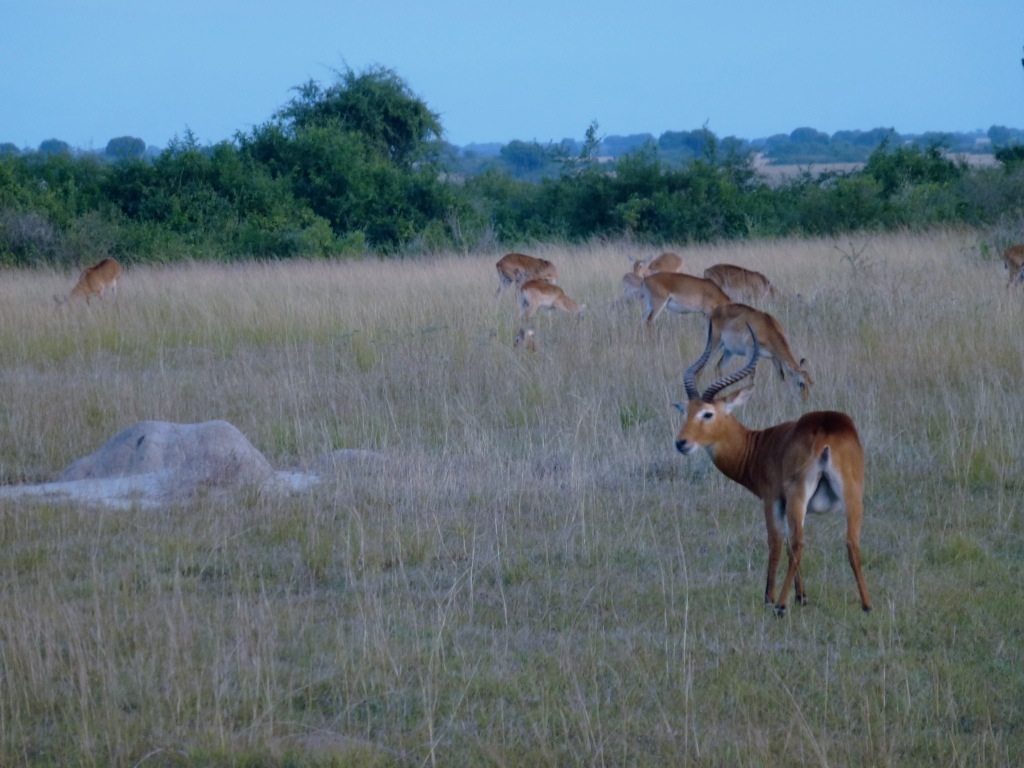
|
Francis took the land rover off road (which can be an $150 fine if caught) to see if we could find what was bothering the kob. After driving around for a few minutes a leopard popped out from a bush right in front of us! It ran in front for a bit before going into a huge bush where it remained. Leopards are pretty rare and according to Francis, he has only seen them once or twice per year. We were lucky because Linds did a great job in getting a picture during all the panic (AND with a point-n-shoot!). |
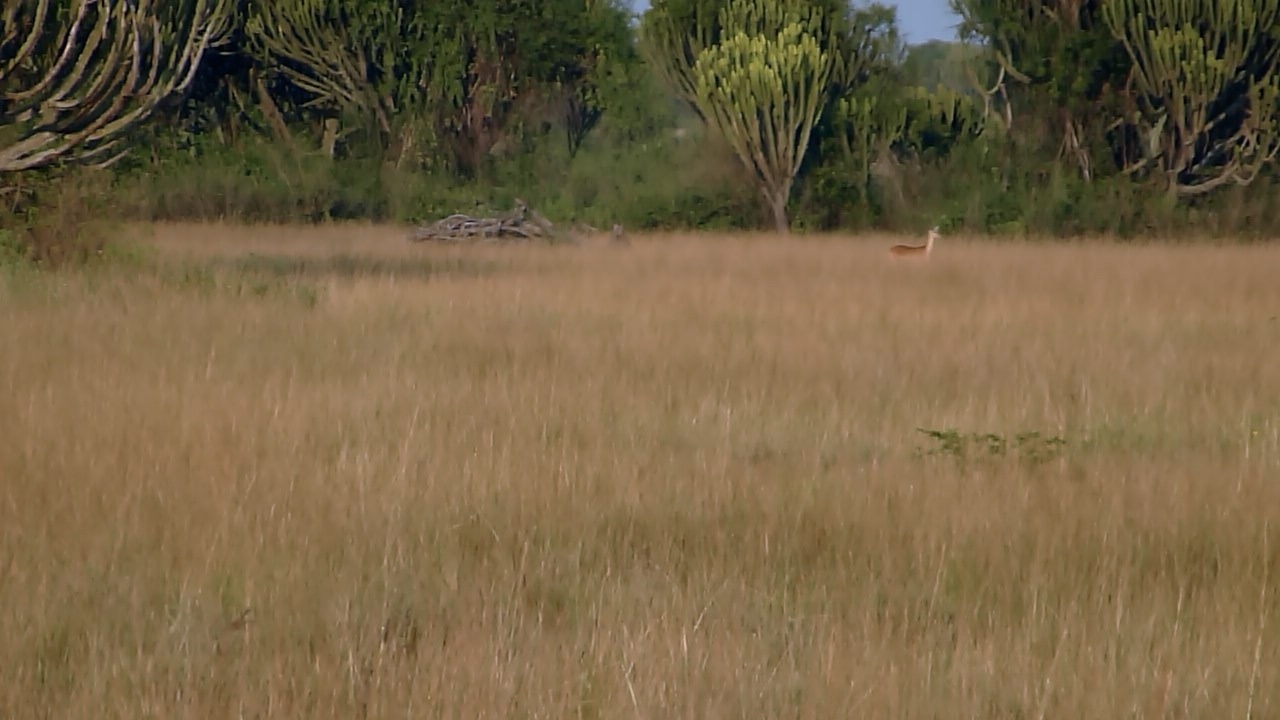
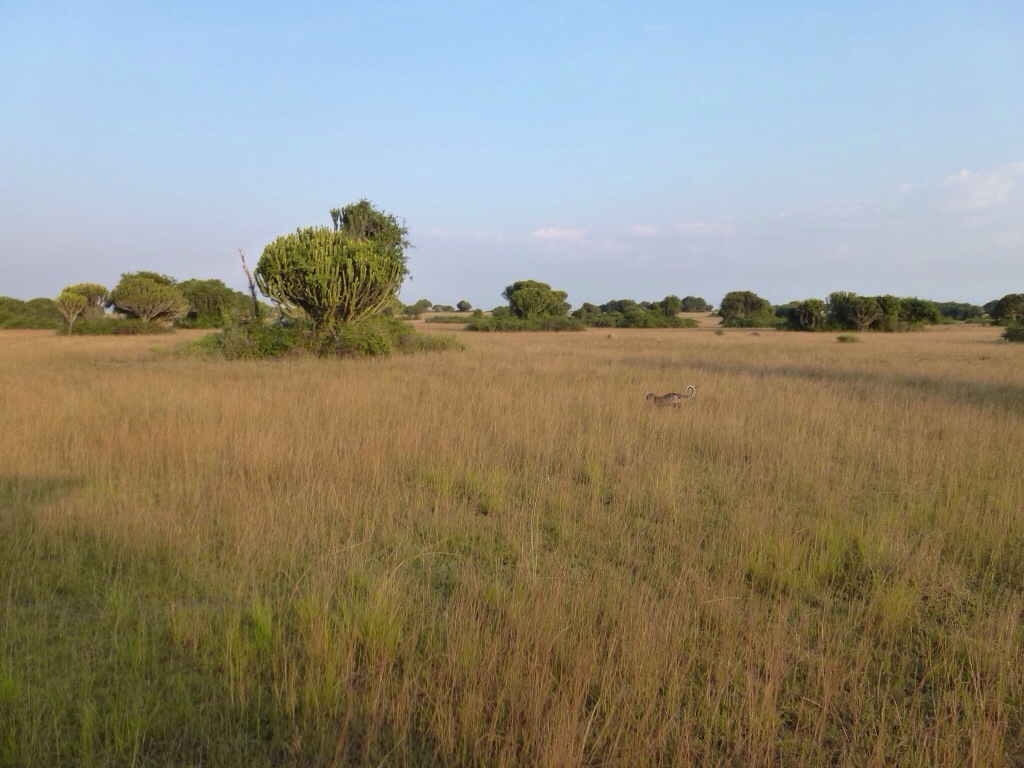
|
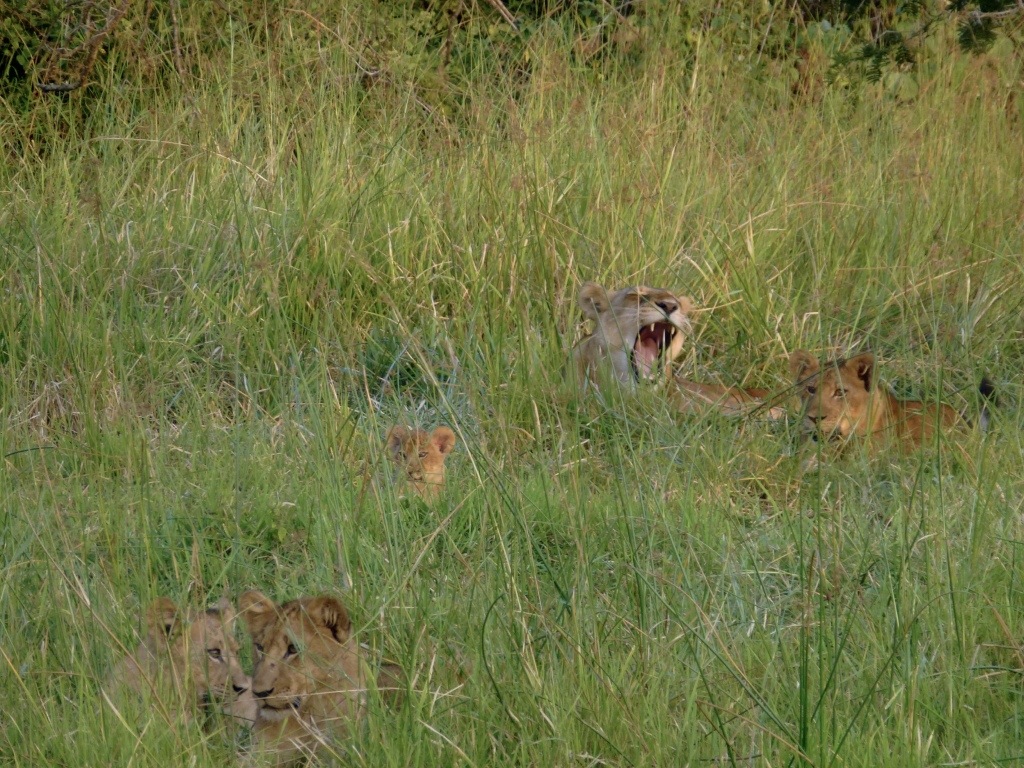
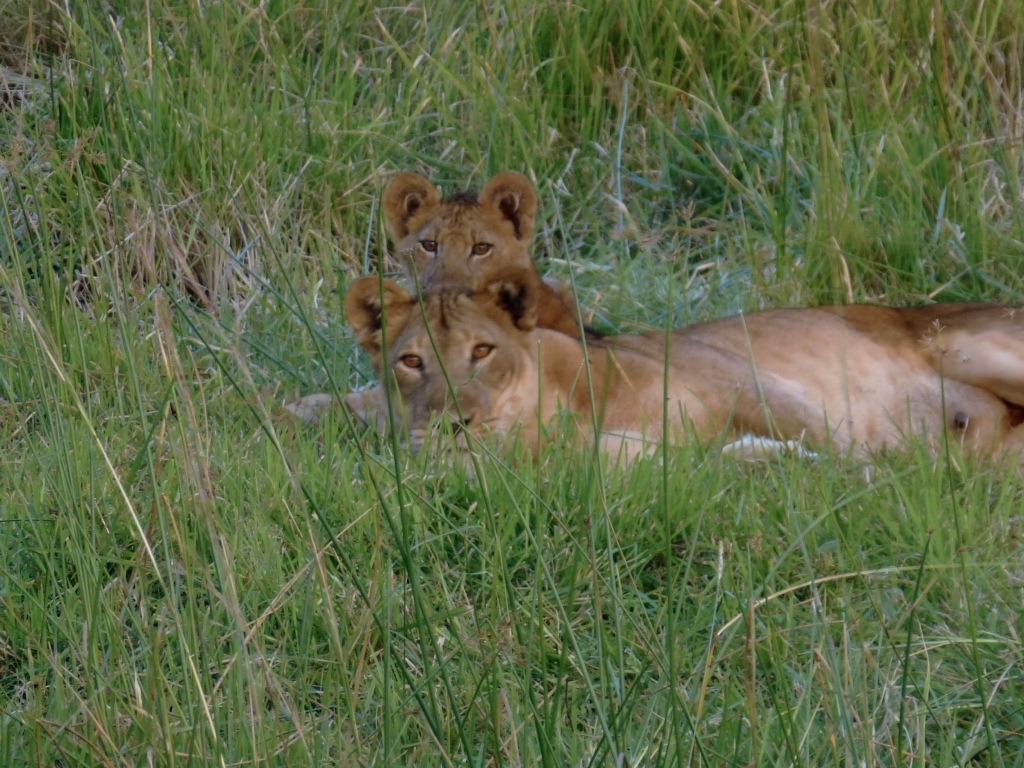
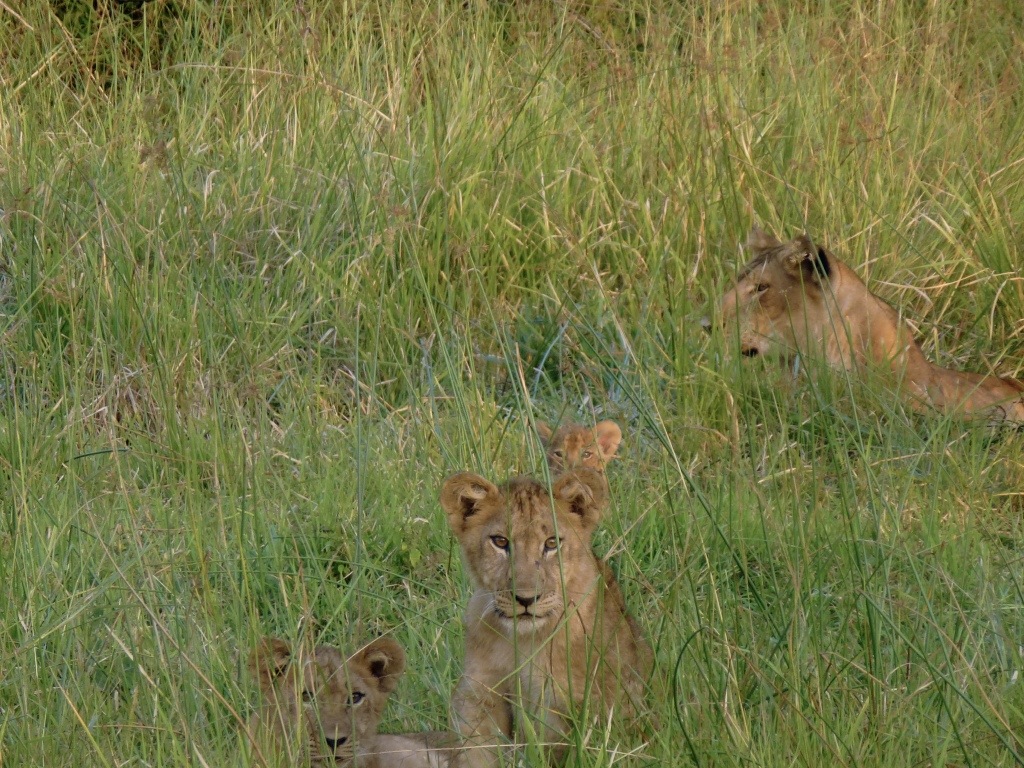
Later, we followed another jeep who had found a pride of lions. We were able to get close and had a solid 20-30 minutes of watching the female lions. In total, there were about 8-10 including cubs. We had a very successful safari that brought us water buffalo, kob, fish eagle ( and tons of other birds), monitor lizards, water buck, warthogs, hippos, crocs, baboons, verbet monkey, elephants, lions and the leopard. We saw four of the “big five” (elephant, leopard, lion, buffalo, rino), missing only the rino. |
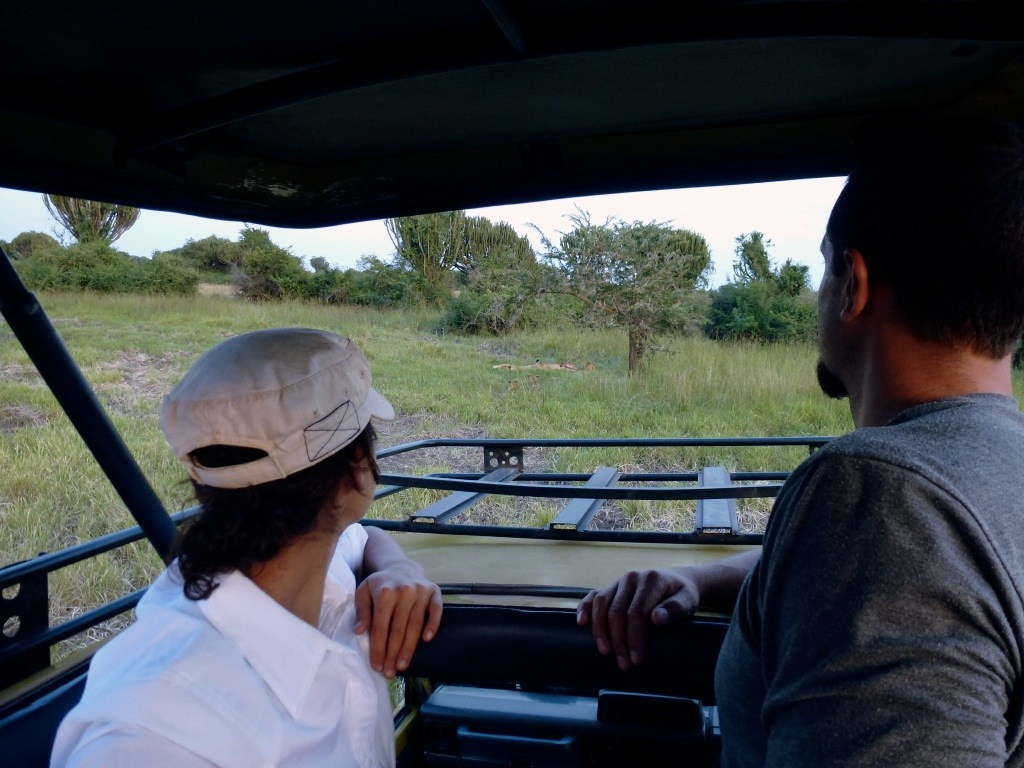
|
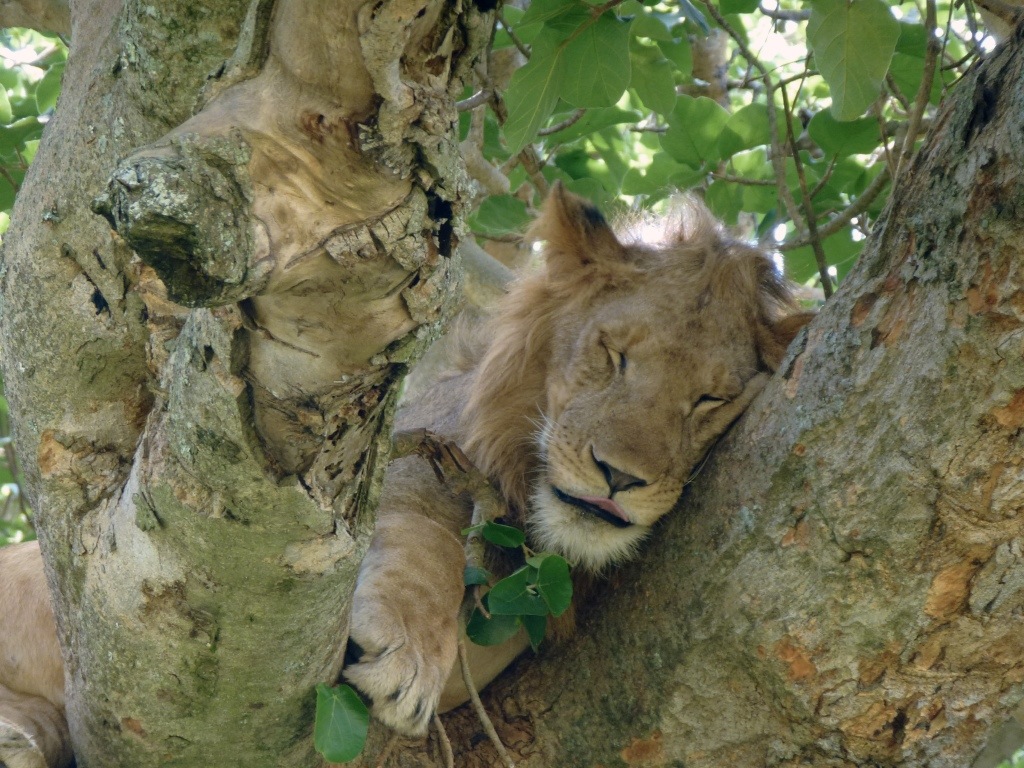
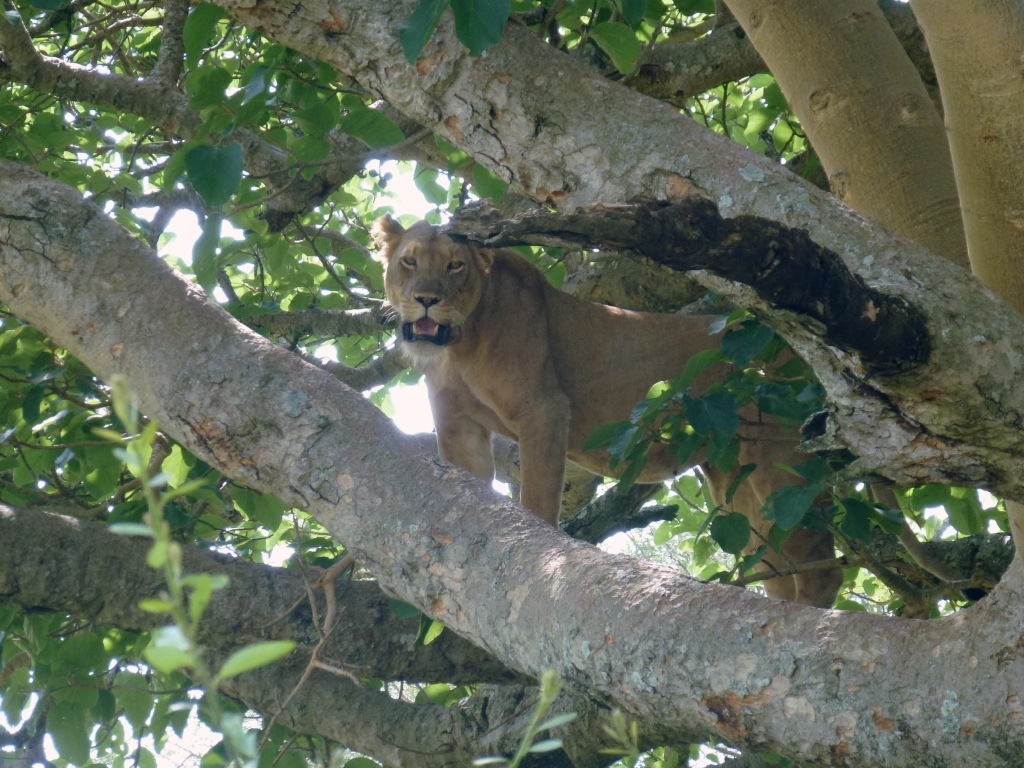
We started off the day the 10-hour drive to Kisoro with another game drive – this time on the opposite side of Queen Elizabeth National Park. After searching for about an hour, we found 5-6 male and female lions sleeping in a fig tree, very abnormal behavior for a lion. They are beautiful creatures! |

|
We knew we had a long day of driving ahead but didn’t know we would be going under 30 mph most of the way on a rough 4WD road. The scenery was spectacular, steep jungle mountains, more tea plantations, but at this point we were unsure the drive was worth 10 hours in the car eating dust. In fact, the roads were so narrow that we almost had a head-on collision with another car. He was speeding around the corner and was clearly too far over on our side. Luckily, our overly cautious driver was going much slower and managed to miss the driver by inches. We finally made it to our hotel by 5:45, enough time for a shower, dinner, then early bed for our 6:00 am departure for the gorilla trek. |
Uganda – Makondo
|
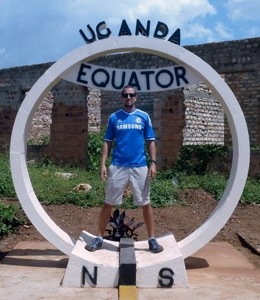
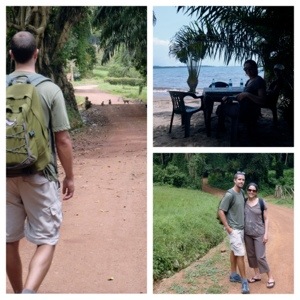
It was so exciting having Maria join us for this part of the trip – our very own personal tour guide! We spent a few days in Entebbe checking out the botanic gardens before driving 4 hours to Makondo. |
|
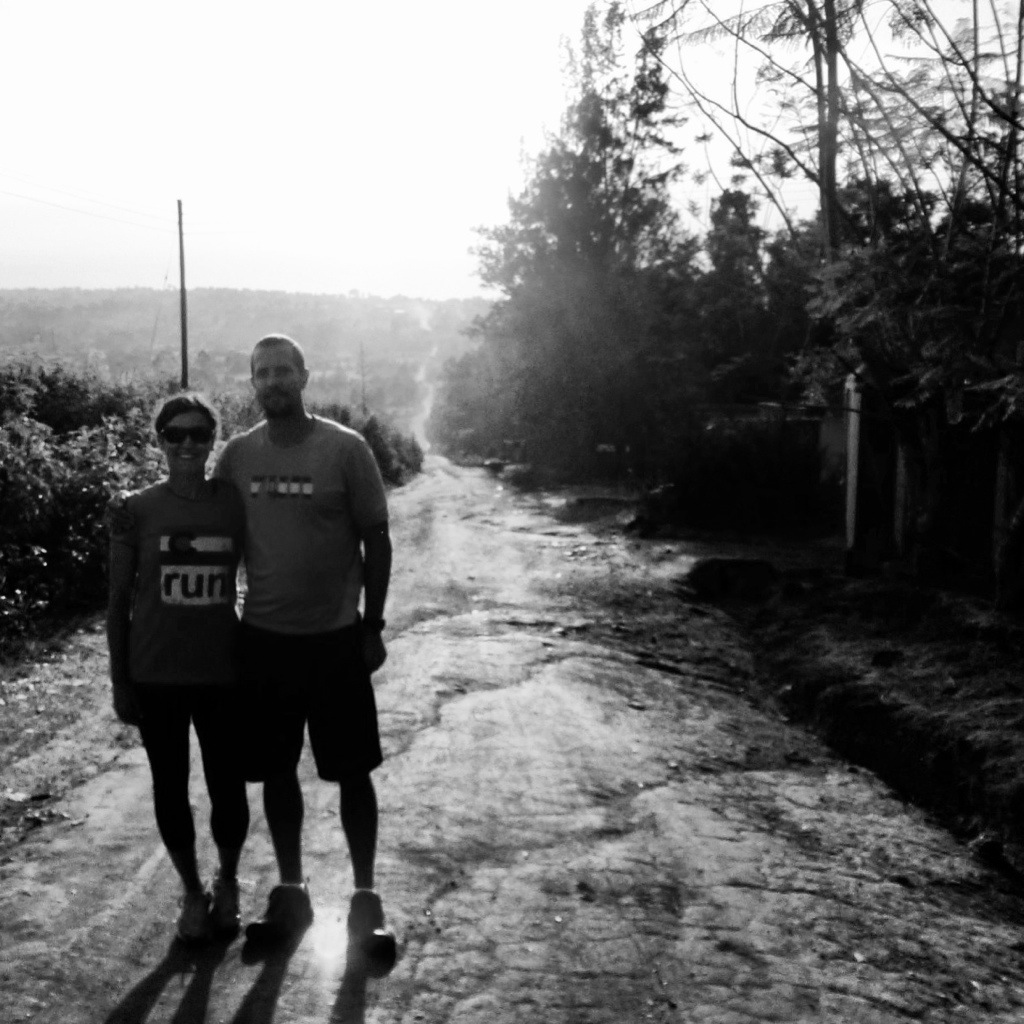
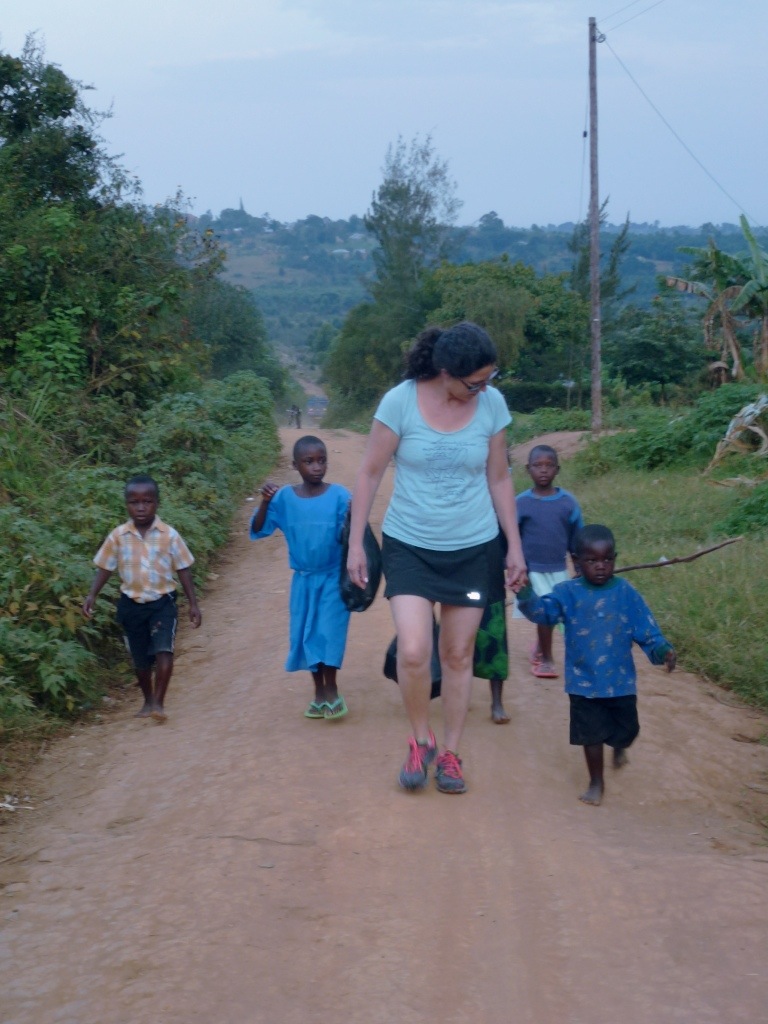
During one of the mornings in Makondo, we went for a morning jog. We found out quickly what it’s like to be minorities. Many of the children were running after us yelling “Muzungo, Muzungo!” which means white person in Swahili. To them, it seems odd to see someone wasting energy by running around. In fact, we even had someone yell, “Are you OK?” thinking we were running from someone or something. |
|
These people will walk upwards of 10KM per day – e.g. filling up jugs of water in the nearby waterhole or picking stalks of maze on their property to sell. Even to Sunday mass — which started at 7:15AM — women and children walked 6KM one way! We understood now why the people of Mukondo were starring as we ran by. |
|
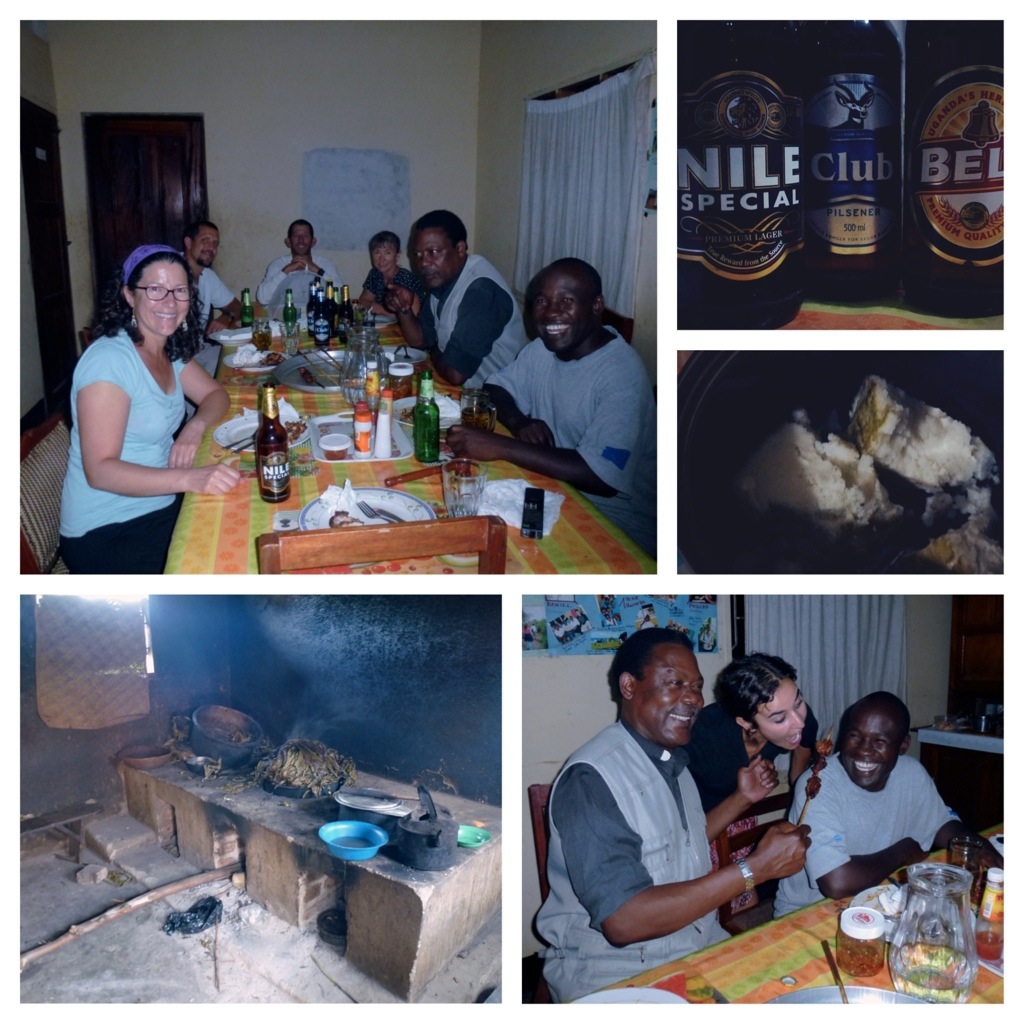
Almost every night during our trip, we walked up to the farm to have dinner. This was where the volunteers (Kris and Dean) and the Father’s slept. According to Dean, they were very happy to have us as guests because their feast during our visit consisted of much more meat and fish. A typical lunch or dinner includes rice, matoke, posho and peanut sauce with pineapple and mango for dessert. Even this would be considered a feast for most families. Matoke is generally served at every meal as it’s readily available. |
|
The taste is… well… quite bland. Kris — one of the volunteers — recommended that we try it with peanut sauce and I was pleasantly surprised at how good that tasted! Posho has a similar bland taste — think clumpy or dried cream of wheat (picture above). I also enjoyed posho with the peanut sauce. Another favorite of the people is mangoes! Christine and Joseph (a few of the students from St. Denis) gave us a whole box of them! And Bizimungu (student from St. Denis) sent us home with 2 pineapples. Considering mangoes cost about $3 each in the states, this was a very nice gesture. We shared the box with several others and it was delicious!! |

|
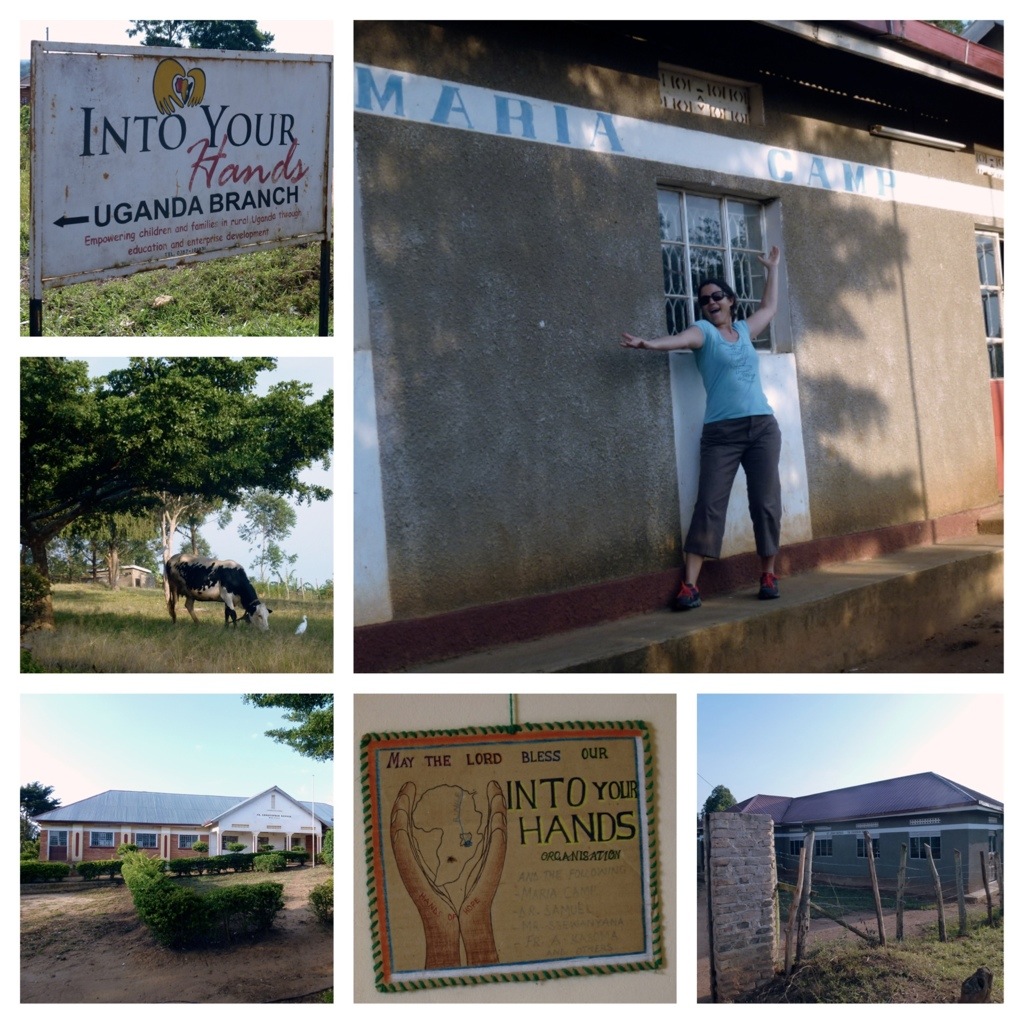
It seemed everywhere we went, Maria was somewhat of a celebrity. During one of our first days, she took us around to show the projects Into Your Hands was working on; which also included the completed classrooms and buildings Maria raised money for over the years. The library, the new dormitory (“The Evergreen Room”), the bore hole (or the local water pump), and several classrooms including “THE MARIA CAMP HALL”. She IS famous!! This was the first building she got involved with back in 1999.. It’s amazing to see all the work she’s done over the years with Into Your Hands and her local Rotary Club. |
|
We even had the privilege of providing a helping hand by cleaning the classrooms before school started back up again (the following Monday). |

|
Another project Into Your Hands has been working on is “send a piglet home”. They will provide the basic materials for the pigs home (e.g. bricks), 2 months supply of food for the pig and the pig itself. In return, the family must give back 2 small piglets once the mother has her first litter (which will be distributed to other families). Subsequently, the families will make money off of selling the piglets to other families, providing income for the child to attend school. It’s a wonderful program that has worked well in the past. Below is a picture of a family we met during our stay.. |

|
Into Your Hands also provides scholarships for students. One of those students is Bizimungu — a 19-year-old from Rwanda, who has moved to Uganda with his 3 siblings and parents (picture below). He completed his last year of secondary school (equivalent of a high school degree) and will be filling out college applications soon. We had the privilege of spending time with him. He seems to have his priorities straight and even better, he’s paving a path for his younger siblings to follow. It’s just amazing to see his progress since he started the program 6 years ago.. |

|
A day in the life of a Ugandan is quite different than the average American. It’s typical to find a family of 10 kids with a father who is no longer around (or spending his days with other males playing cards and drinking games). The kids are needed to help around the house, to gather food from the garden for dinner, to fetch fresh water from the water well and even look after younger siblings. This leaves little time for an education. |

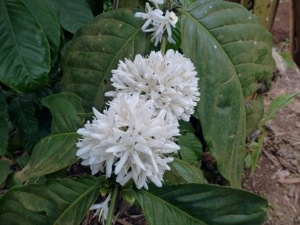
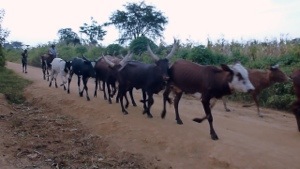
|
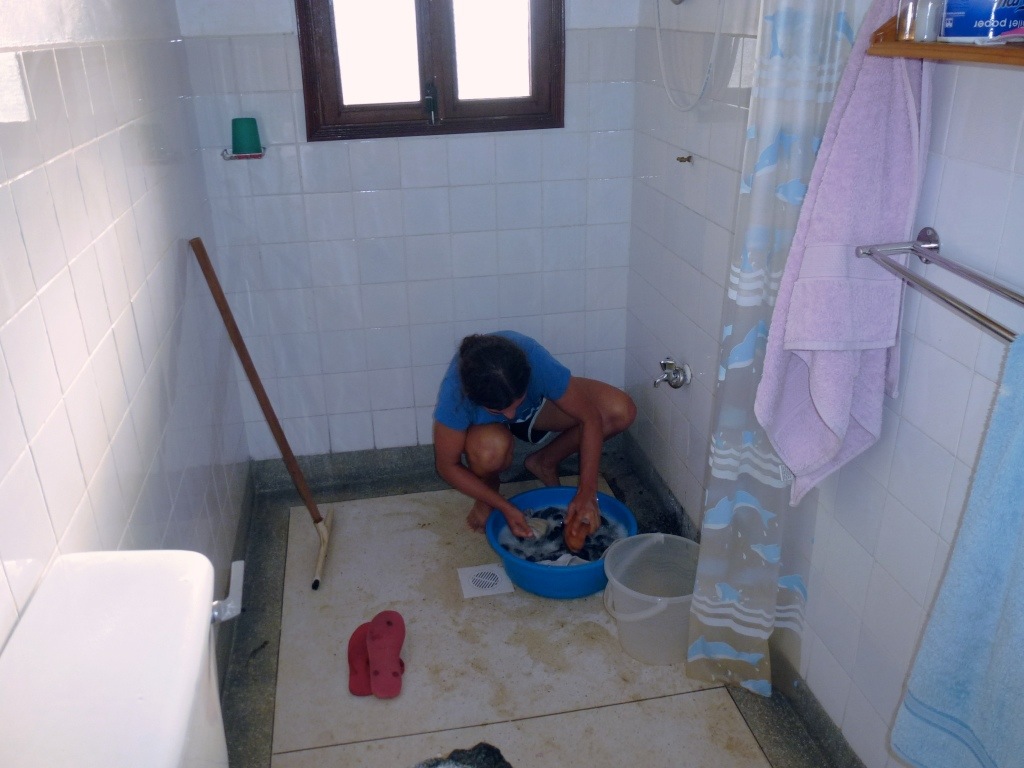
It was such a humbling experience for us. We had to wash our own clothes by hand, conserve water (which means no long or hot showers), cook our food and wash our dishes, and find ways to entertain ourselves (without electricity – in some cases – and no TV). The experience enabled us to truly start appreciating the small things in life again. Absolutley wonderful experience! |
 Rob and Linds