|
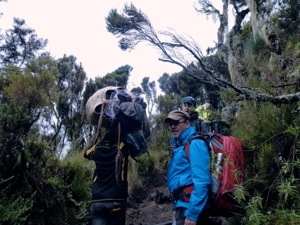
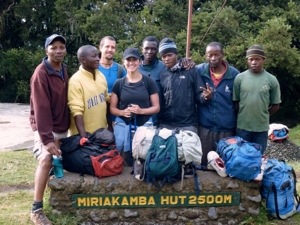
Our guide – DUMA (which means Cheetah in Swahili) – picked us up at the hotel about 9AM. It was the first time we negotiated with our guide to pick us up at a reasonable hour (rather than 5AM). When he arrived, the van was already full with 6 people not including us. It wasn’t until we arrived did we realize those people were coming along to support us. In total, we had our guide (Duma), a cook, a driver, and three others to help carry our items (bags, food, sleeping bags, etc.) as can be seen in the pictures below. |
|
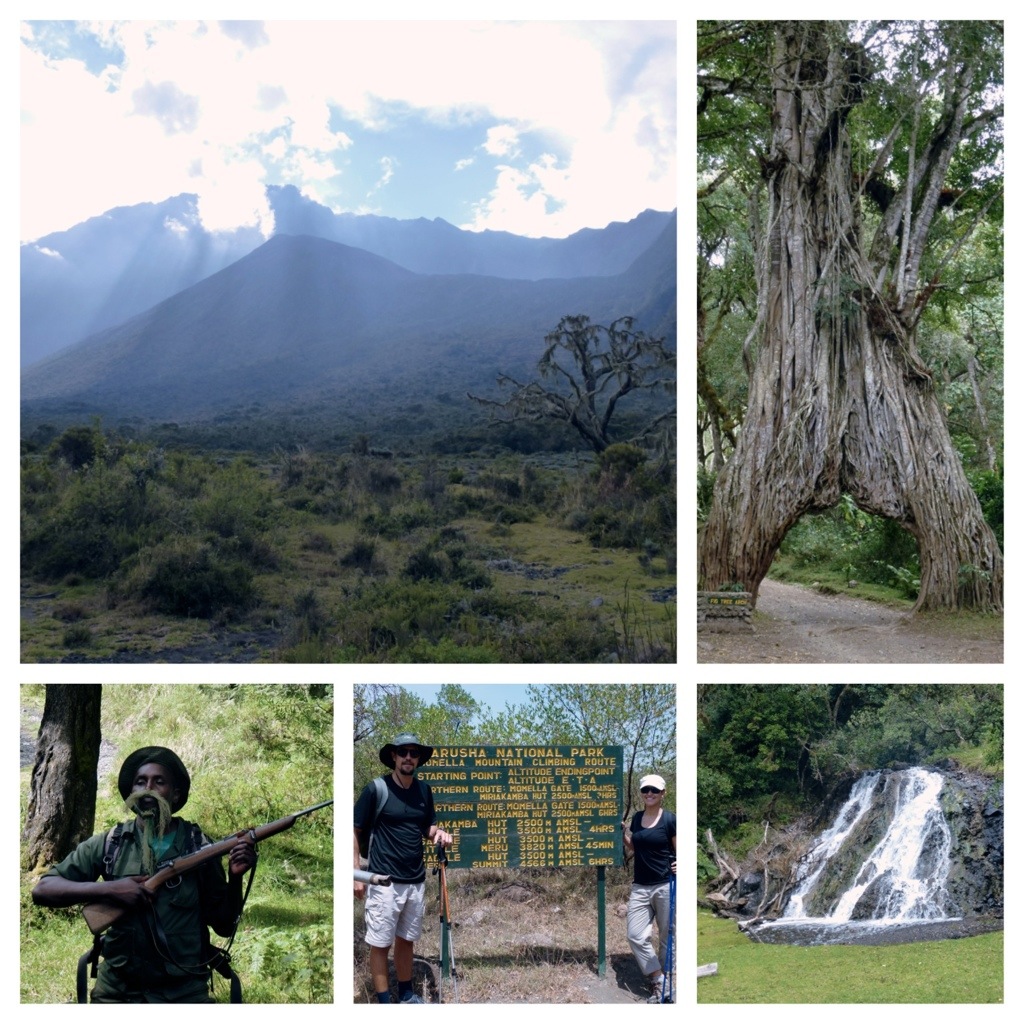
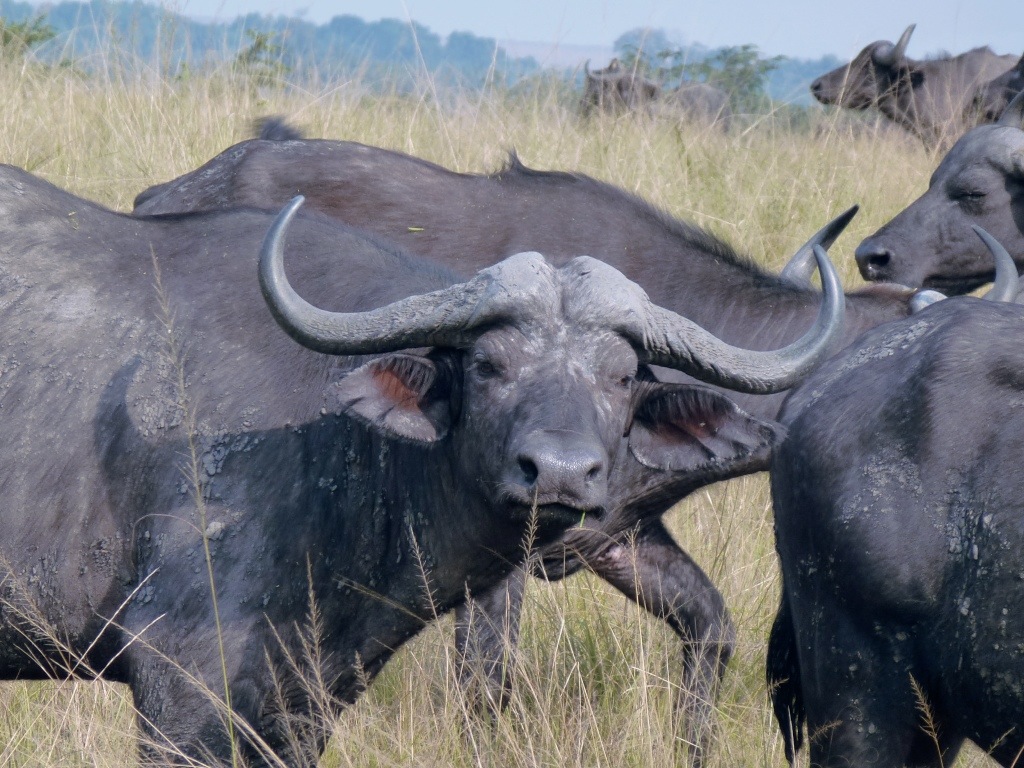
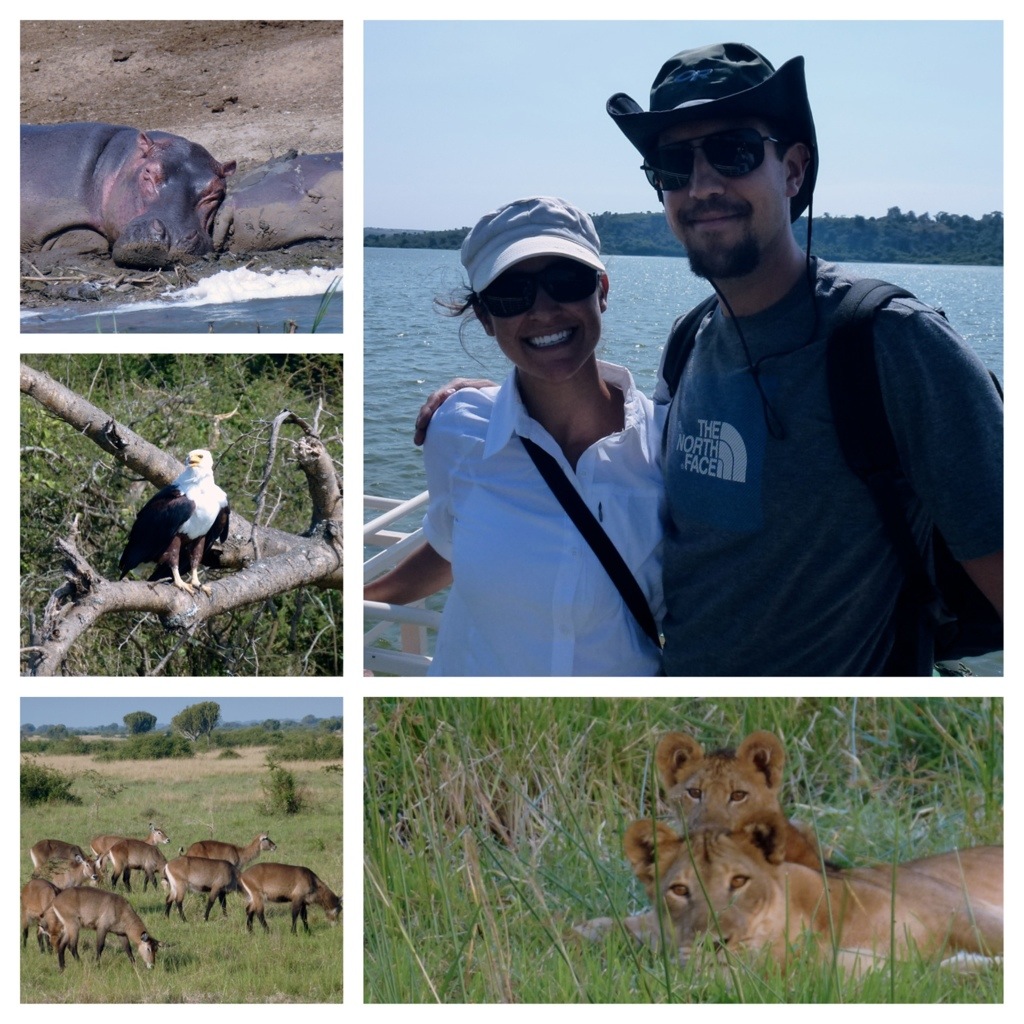
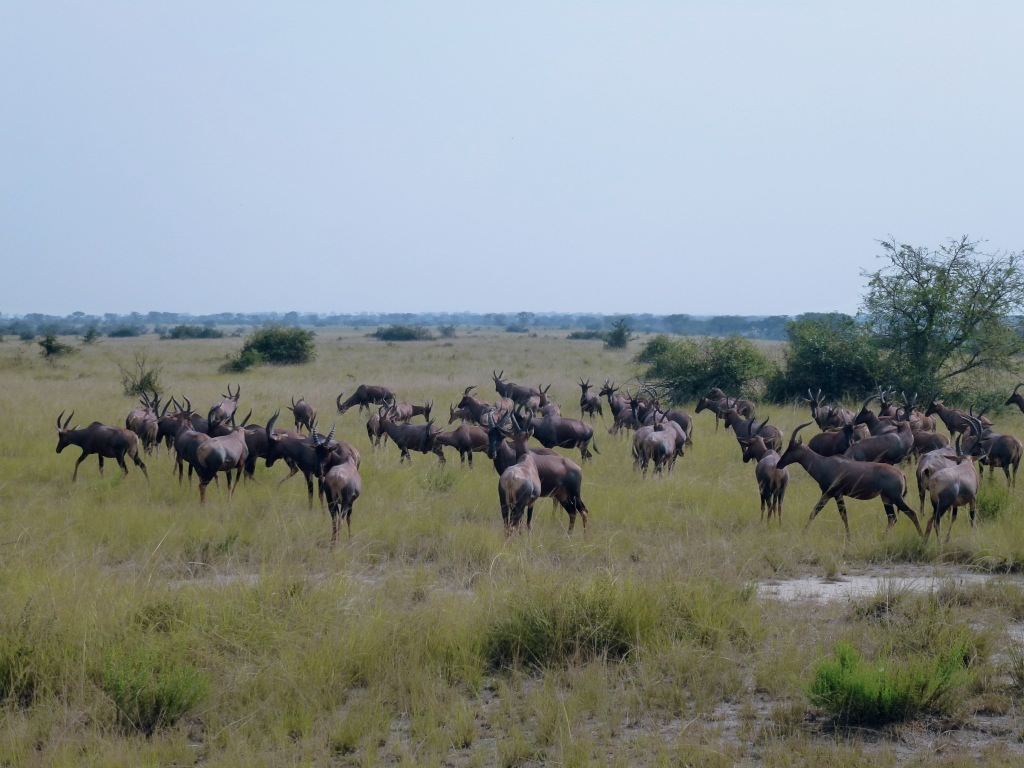
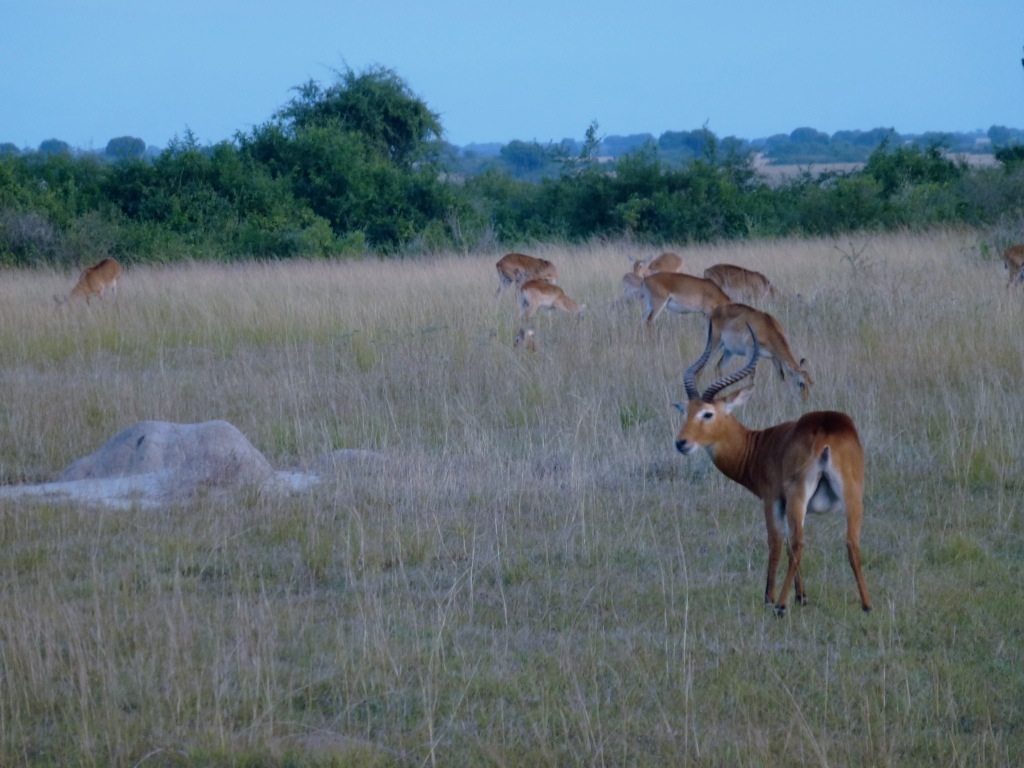
The first day of the hike was 14 KM which took us about 5 hours. We would’ve gone faster considering the 14 KM was basically a walking safari, but the armed ranger asked us to kindly slow down since we were hiking with other groups (in total 10 other people). We were able to see buffalo, zebra, giraffe, colobus monkey, blue monkey, bush buck, dik dik, and many others. The surrounding area was beautiful; dense forest trees, green vegetation, mountains, etc. |
|
Once we got to around 7,000 feet the vegetation became a bit less dense and green and we could now see the summit. Unfortunately, Kilimanjaro was blocked by clouds and we weren’t able to get a good picture (later – after several days of hiking – we were only able to catch a 5-10 second glimpse of the mountain). |

|
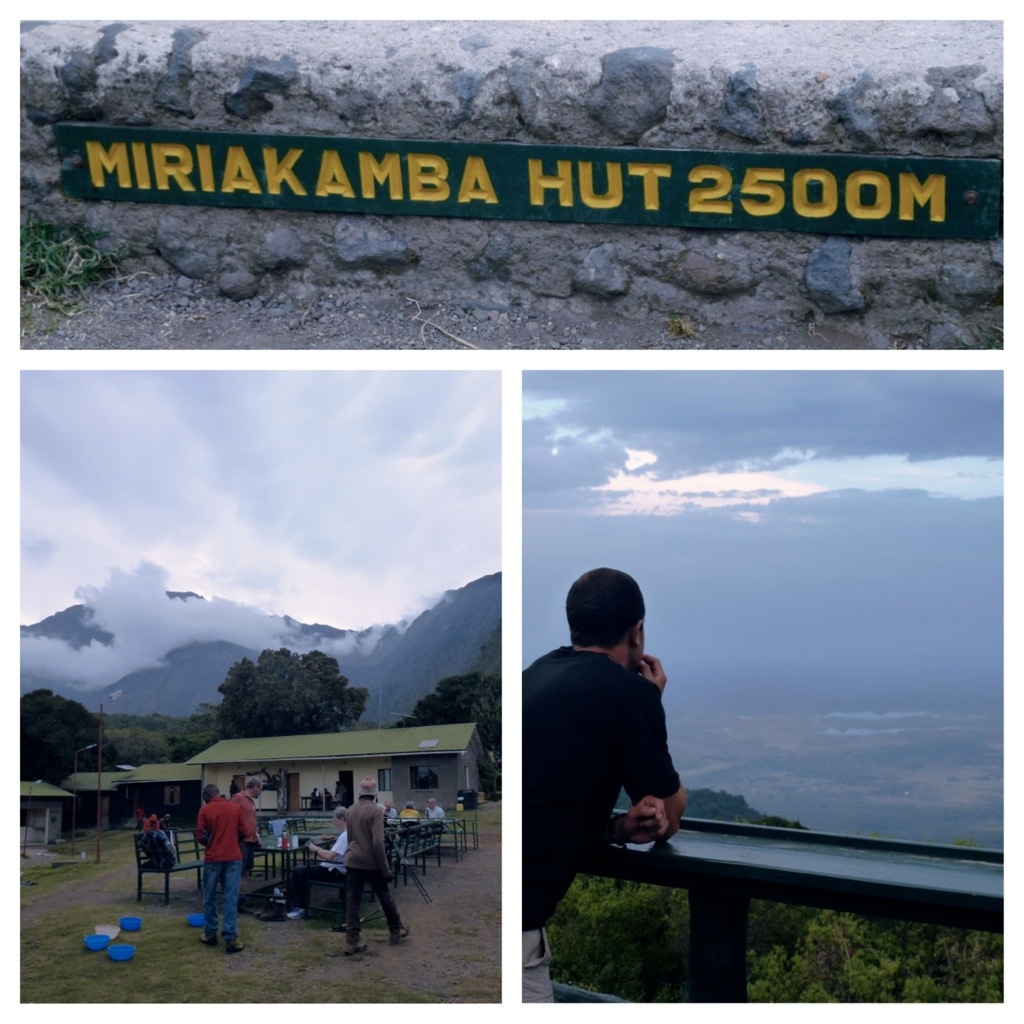
The first camp was pretty impressive; over 100 guests could stay with 4 bunk-beds in each room. It also had bathrooms, a kitchen and dining hall. The ranger had discussed that he’d get us the best room in the hut… Later, we realized he was only kidding. The camp was at about 7,500 feet. |
|
When we arrived we had time to “wash off” (no shower or hot running water) with a wash cloth, then hung out with Duma. The crew then made a really nice meal, soup, tilapia (a very popular dish in Uganda), rice and veggies. |
|
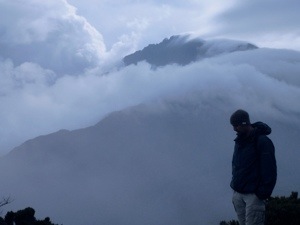
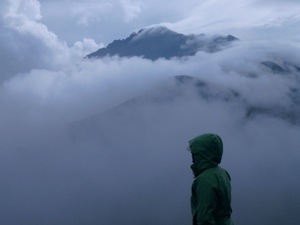
After breakfast, we began the trek to camp 2 – a 7KM from 7,500 ft to 10,500 ft which was much steeper than the first hike (same elevation gain but half the distance). We were going along the ridge to the saddle huts, at the saddle between Meru and Little Meru. Unfortunately the sky did not clear up, in fact we just kept hiking further and further into the clouds. Luckily, there was no hard rain like Mt Sabyinyo but the temperature was dropping quickly! |
|
We made it to the Saddle huts around noon for lunch and I was convinced we could’ve continued onward for the pure reason of staying warm. We were in desperate need of hot water to wash up (as you can see by the picture of me below — attempting to ‘wash up’) and for tea and coffee. As the porters and Duma could tell you, I quickly learned how to say “Warm Water, Please” in Swahili after this hike… “MAJI MOTO TAFADHALI”… Most of the huts had the windows open AND some windows were even broken!! No wonder it was freezing. After lunch, we made our way with a lovely group of Austrians to Little Meru where we were hoping to rise above the clouds to see Kibo (what the locals refer to Mt Kilimanjaro) and Mt Meru. The clouds parted once we made it to the top and we were finally able to see views of the summit. |

|
During dinner we discussed our plan for the next day – a wake up call at 2 AM (7KM hike with 3,000 ft of elevation gain) and summit the mountain by sunrise. Due to the cold weather, we tried to snuggle up in the sleeping bags and be in bed by 8:30 PM but failed to get any real sleep. Even worse, by 9 PM we could hear rain beating down on the hut, making it an unlikely departure of 2 AM. |
|
Still at 1:30 AM, the rain was pouring! Our guides informed us that we would wait it out and try again at 6 AM. It was still drizzling at 6 AM, but Duma came in and said “Pack your bags, we are leaving in 10 minutes!” I could not believe he came to this conclusion, considering other groups were contemplating leaving the hut at all. We had a light breakfast (1 hard-boiled egg each and coffee) and hit the trail by 6:50 AM – the first (and at that point, the only) group out the door. |
|
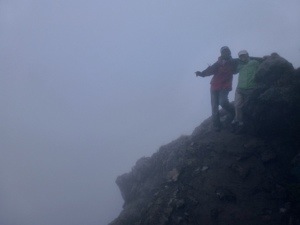
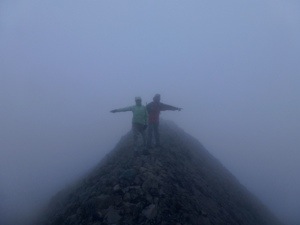
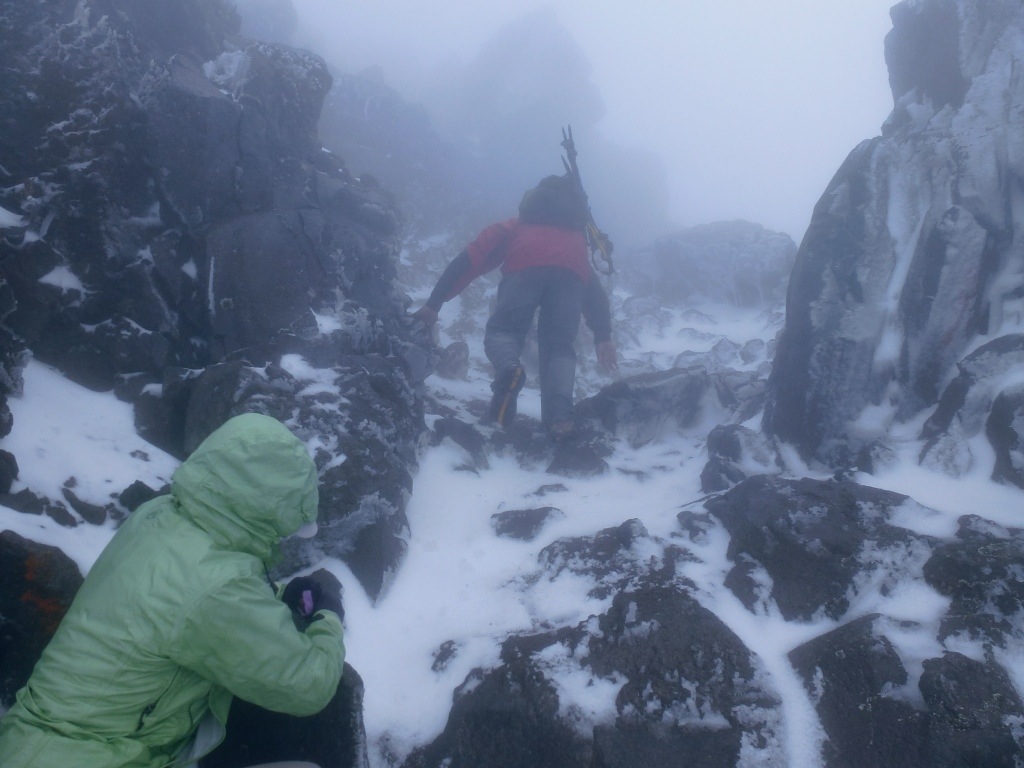
While it wasn’t raining, the clouds and mist were very thick; low visibility and very high winds. Soon we were soaked from all the mist and it was starting to get even more cold. At times the wind was blowing 50-70 mph and towards the top it started to snow. I took a video of Rob and Duma near the top — check it out here: https://www.youtube.com/watch?v=IIrKQkNDJKo&feature=youtu.be. |
|
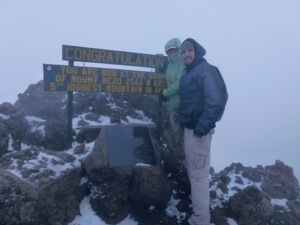
There was a point where I couldn’t feel my pinky fingers at all and had contemplated turning around due to frostbite. We even told Duma we were thinking of turning back and he looked at us like we were crazy, saying we were only 20 minutes from the top. We trudged on and finally made it; ~15,000 feet – The tallest mountain we have ever climbed and, considering the weather conditions, the hardest mountain we have ever done. We even got a few views of the top of Kibo as the clouds blew by! |
|
On the way down we passed the other three groups and gave them words of encouragement (and even snagged gloves off the Austrians – which saved my life!). We were happy to hear each group made it. In total, the summit trip took us 6 hours for the 14 km round trip – the fastest group of the day. Even better, Duma said this was the hardest Mt Meru climb he had ever done in the 20 years he has been climbing it!!! |

|
The way down was much more pleasant and we enjoyed conversations with the Austrians and Duma. We learned a lot more about the country of Tanzania and Austria (apparently a MUST-SEE — so it could be next on the list of places in the world to visit!!). We couldn’t have asked for a better guide – Duma was amazing and full of knowledge. We would highly recommend him if you ever make the trip to Tanzania and wish to climb Mt Meru or Mt Kilimanjaro. |
|
Until next time, Asante na Kwa heri! |

 Rob and Linds