Gorilla Tours

20140204-132250.jpg

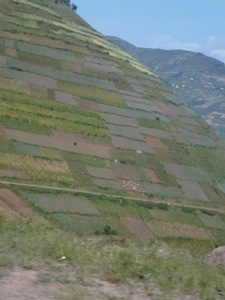
At this stage of our trip, 5AM wake up calls were becoming the norm. Today, after only two hours spent in the car, we arrived at Biwindi National Park for the gorilla trek. The drive to the visitor center was rough but took us through spectacular scenery (very similar to the road that took us to Kisoro); very steep drop offs, big mountains and lush green rainforest. It was amazing to see how much of the mountainside the locals are able to farm. Even on the steepest slopes, they have crops planted to the top. This area also gets very misty in the morning so we can see where the term “gorillas in the mist” came from.

20140214-143254.jpg

Neither of us really knew what to expect for the gorilla trek. All what we were told was (1) it could take up to 8 hours to find them and (2) to bring a rain jacket. I (Rob) thought we would be in a big group and only see them from a long distance, but what ended up happening was the 30+ trekkers were broken up into 4 groups. Each group had a guide and a security guard with an AK47. The reason for the gun was to protect us from other animals, including elephants and buffalo which are known to charge at times. Even the gorillas could be unpredictable. It turns out each group hikes to their own family of gorillas (which is about 10 gorillas per family and up to 20 gorillas). Each family has 2-3 people following them on a daily basis to ensure the trekkers are able to see them.

20140204-133057.jpg

20140204-133036.jpg

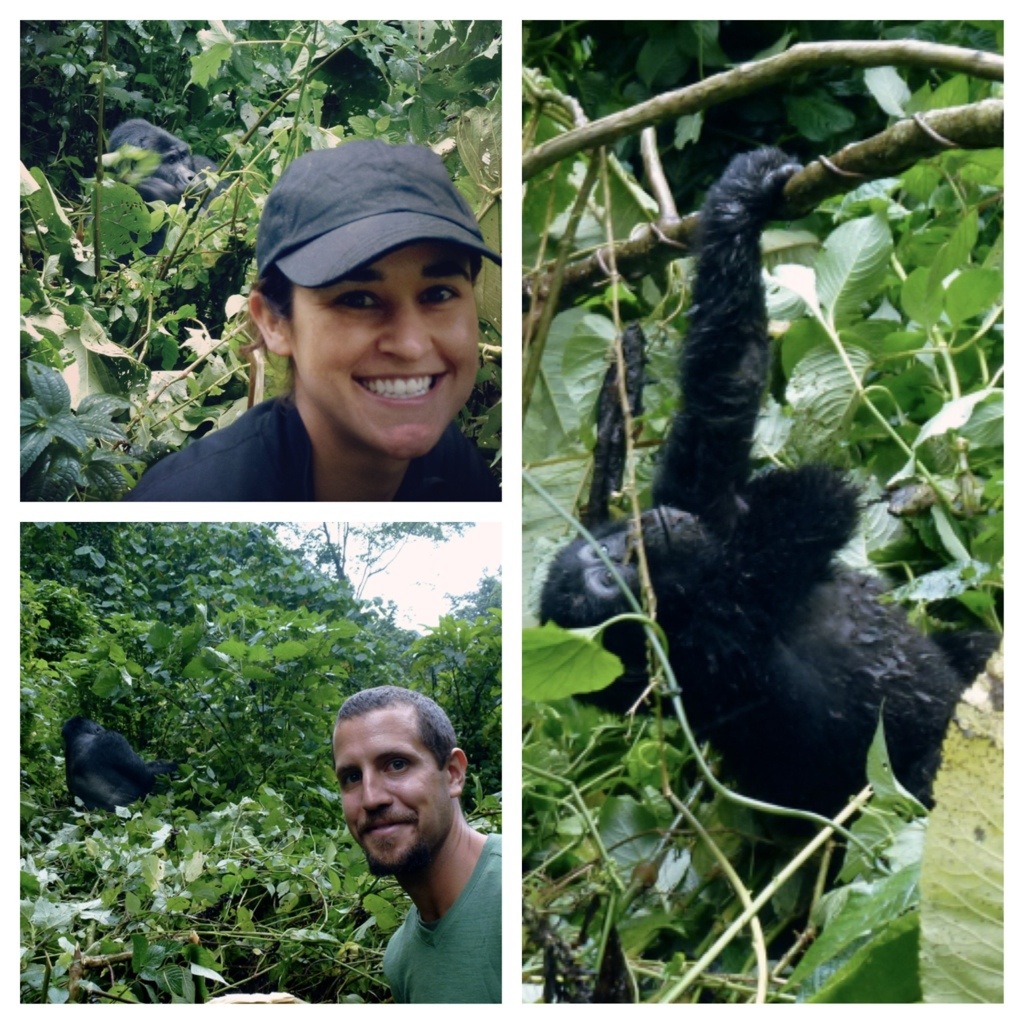
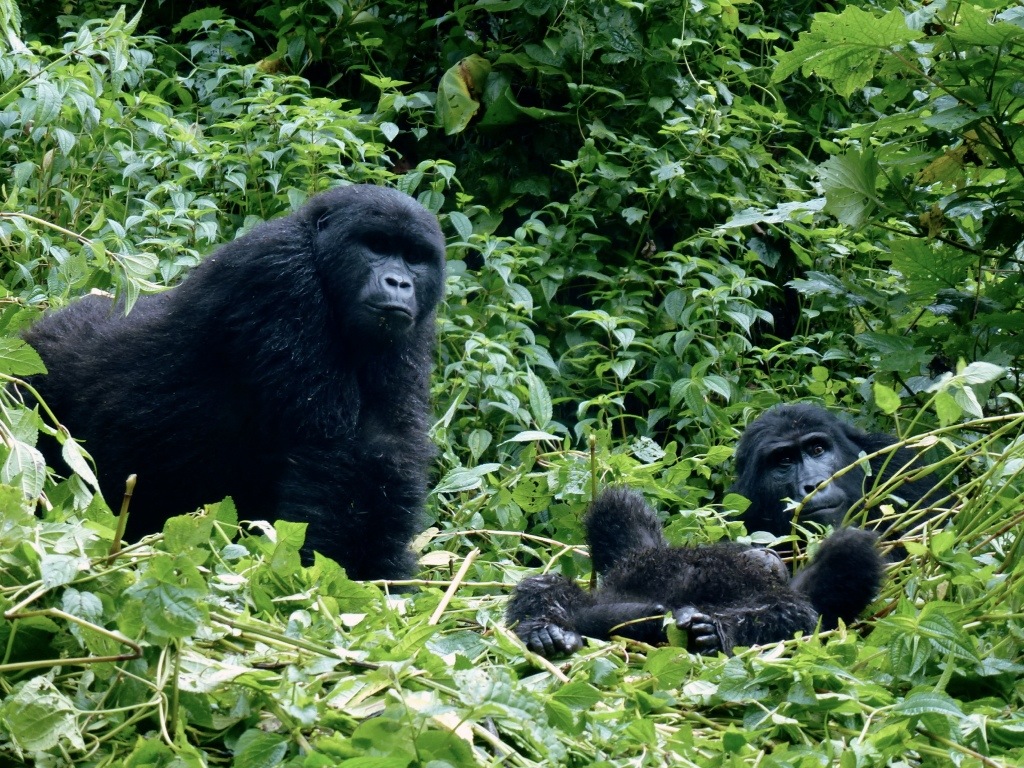
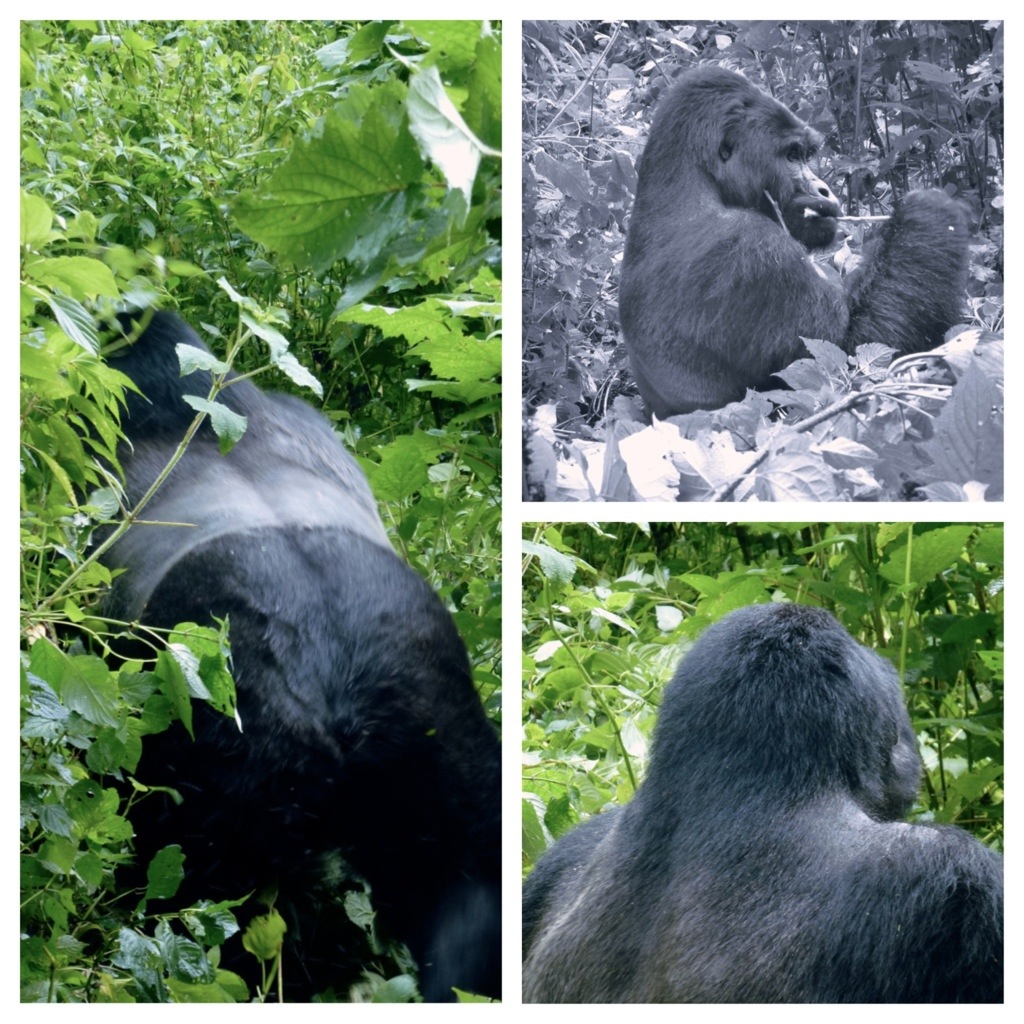
So our group of 10 (including 2 guides) set off to go find our family of gorillas (interestingly, we found out later how many locals know the gorilla families and asked us which family we were following). Most of the hike was along a pretty nice trail through the rainforest. After about an hour our guide received word of where exactly the gorilla were located. This meant bush-whacking time. Our guides used big knife to start blazing a trail through the rainforest towards the location of the gorillas as we slowly followed behind, slipping and sliding down a steep embankment. Twenty minutes later, we saw our first silver back (a.k.a. THE KING OF THE JUNGLE). I couldn’t believe how close we could get!!

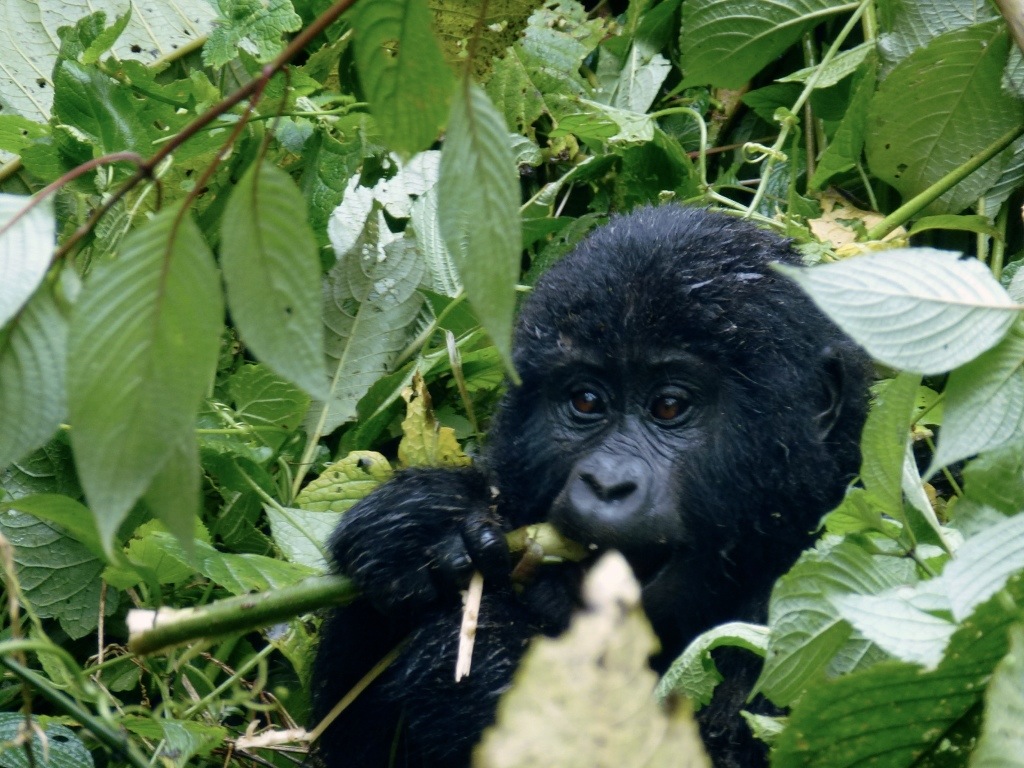
We got some amazing pictures and had over an hour with the wild gorillas. Even better, our guides said we were lucky to have such good views and were able to get so close. An amazing experience to say the least.

20140204-132353.jpg

20140204-132313.jpg

I found all this Gorilla information just fascinating. We learned a vast array of info from Gorilla Tours including:
– About 98% of the Gorilla DNA is equal to man
– The word “Gorilla” means “a tribe of hairy women” or “hairy person” (in Greek)
– Four gorilla species exist today: (1) Western lowland (2) Cross river (3) Eastern lowland (4) Virunga and (5) Bwindi (we saw the Bwindi Gorillas where there are ~400 animals)
– Groups are built around one dominant silverback and groups consist of an average of 12 animals and up to 40

Male Gorillas:
– Males are considered adults between 12 and 14 or at the point at which their silverback has matured (i.e. gray air on their backs)
– Sweat glands are located in the armpits and in times of stress, the males have a strong body odor
– The dominate male decides when the group should eat, sleep or rest and when to break up. He also has exclusive rights on mating
– If a silverback takes over the leadership of a group, it may take several months before the other group members accept his as the dominant silverback
– All gorillas will beat their chests when greatly excited; however the chest-beating of males is most used to impress, intimidate and test the strength of the opponent
– Male life expectancy is 26 years old

20140204-132334.jpg

Female Gorillas:
– Females are considered adults at the age of 8 and don’t have children until 10
– At birth, males and females weight about 2 lbs and females breast feed their offspring for the first 36-months of life
– A female will be fertile for an average of 14 years, producing 5 young in her lifetime
– During the first 4-5 months of the young’s life, there is 100% contact with the mother. It’s not until 1 year that the young will increase its independence
– Females will usually change groups a couple of times during their lifetime and the dominate silverback of the group may try to prevent this from happening.
– The bond between the mother and daughter is close (unlike other females within a group) and the urge to be with a mate who offers her protection is deeply rooted
– Older females in terms of status directly stand below the dominant silverback
– Female life expectancy is between 25 and 35 years old

20140204-132342.jpg

Lifestyle:
– Gorillas benefit from feeling comfortable and safe within the group
– Physical contact between the different group members is very important for their survival. Some research has shown that those who are kicked out of their group can become depressed and as a result they stop eating and could get sick and die
Sleep:
– Lighter females will typically sleep in the trees while the males will sleep on the ground
Food:
– Primarily herbivores but also eat fruit, insects and dead wood (due to the sodium content). This includes bamboo shoots and will also depend on the seasons (i.e. the Bwindi gorilla east more fruit since it’s more readily available than the Virunge gorilla)
– Due to their large and long intestines, they need to eat large amounts of food per day (upwards of 20kg per day!)
Communication:
– Gorillas use visual (body and facial expressions) and vocal communication
– Vocal communication consist of 25 different sounds including roaring, hooting, giggling, barking and growling